
Cooling-Off Periods at Online Casinos: What They Are
Cooling-off periods are a regulatory tool, not a gift. They prevent a player from accessing funds they've already won. Understand the mechanic before you commit.
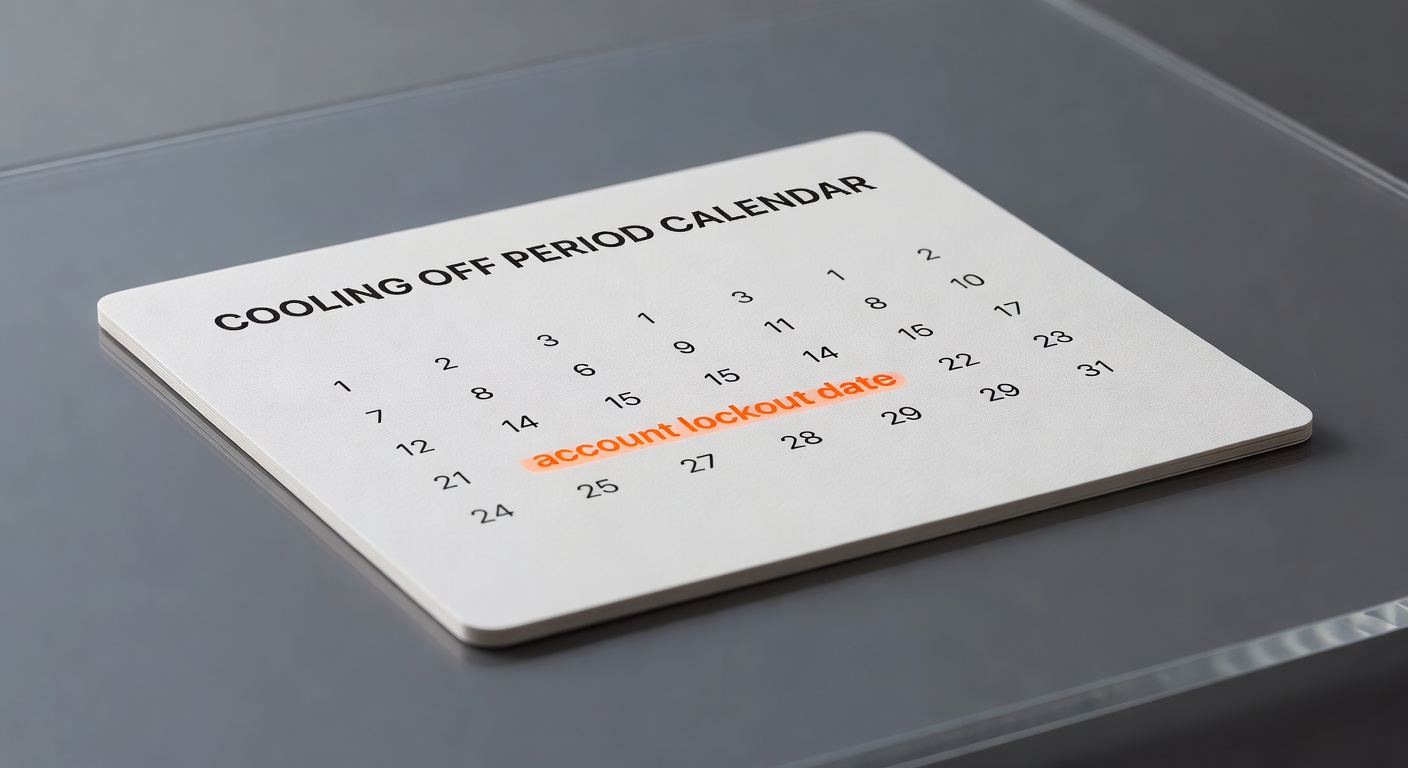
A cooling-off period, also called a play-through period or wagering requirement, is a regulation designed to make gambling less friction-free. But what it actually does depends on which direction you're looking from.
Let me be clear about what these periods are: they're mandatory waiting periods between when you ask to withdraw money and when the casino will process the request. During that time, you're locked out of the funds. You can play them, but you can't leave with them.
The Regulatory Purpose
The original idea comes from jurisdictions concerned about impulsive withdrawal. If you win 5,000 dollars, you might immediately withdraw it while you're excited. The cooling-off period makes you wait (often 24 hours, sometimes longer) to "think it over." The theory is that you might reconsider and keep playing, which could be healthier than immediate cash-out. Or you might use the time to second-guess yourself into poor decisions. The regulation isn't neutral about outcomes; it's just about slowing things down.
Some regulators have framed this as consumer protection. Preventing the impulse withdraw. Giving time to think. But the mechanism is unchanged: your money is inaccessible during that window.
The Math of Cooling-Off
From a player's edge perspective, cooling-off is negative. If you've won 5,000 dollars and want to withdraw, you've achieved a +5,000 dollar result relative to starting. A cooling-off period forces you to remain in the casino with that 5,000 dollars accessible for play.
During that period, you're facing house edge. If you play, you're now facing edge on your winnings. If you don't play, you're just waiting. Either way, the expected value during the cooling-off period is negative to neutral.
A sharp player's move: win, request withdrawal, don't play during the cooling-off period. Accept the zero EV of waiting rather than the negative EV of continued play. This is basic bankroll management: once you've won, leaving the game is the correct mathematical move.
The regulation exists partly because casinos want players to reconsider. The longer you're in the building (or the casino's website), the longer you might change your mind. An impulsive player might re-deposit during the cooling period. A disciplined player won't. The regulation is built to assume the former.
What "Cooling-Off" Doesn't Do
Cooling-off periods do not prevent withdrawals. You still get your money. It just takes longer. Some casinos advertise "instant withdrawals," which means they skip the cooling-off period if you agree to their terms. They're trading friction for commitment.
Also important: cooling-off is not the same as betting requirements. A "play-through" requirement (bet the winnings or the bonus multiple times before withdrawal) is different. That's a constraint on what you can do with the money. Cooling-off is just a time constraint.
Some jurisdictions have moved away from mandatory cooling-off, finding it more paternalistic than protective. Players want frictionless access to their own money. But other jurisdictions keep it, reasoning that the moment after a big win is when impulsive decisions happen most often.
Comparing Jurisdictions
Malta and Gibraltar (popular casino licensing jurisdictions) generally do not mandate cooling-off for withdrawals. A player can request a withdrawal and receive it quickly, sometimes within 24-48 hours of request. Casinos compete partly on withdrawal speed.
The UK mandates cooling-off for some products but not all. Sports betting, for instance, has different rules than casino games. A UK player pulling out of a casino might face delays; a UK player cashing out a sports bet might not.
Canada varies by province. Some require cooling-off for certain account actions. Others don't.
The pattern: if a jurisdiction is trying to discourage problem gambling through friction, it'll use cooling-off. If a jurisdiction is prioritizing player access and market competition, withdrawal speed is often part of the offer.
The Play
If you're evaluating a casino, withdrawal terms matter. A 24-hour cooling-off period is standard in some places and a red flag in others, depending on your jurisdiction and how much you value quick access.
For strategy: once you've won a target amount, the correct move is to request withdrawal immediately and stop playing during the cooling-off period. Treat the money as gone, mentally. This prevents the impulse to re-gamble.
The regulation exists partly to slow you down and hope you'll reconsider. If you understand that's what it's doing, you can account for it in your planning. Don't view cooling-off as a gift or a feature. View it as a friction point that exists to keep you in the game longer.
Mathematically, immediate withdrawal with no cooling period is better for the player. The casino designed the cooling period partly because they know that. If a casino advertises "no cooling-off," that's actually a feature worth noticing, not a hidden detail.
Markets in this line
Keep reading
Same market
 Big WinsImplied Probability Formula for Every Odds Format
 HistoryClosing Line Value Calculator: The Math Behind CLV
 Big WinsTerrance Watanabe's $127 Million Loss at Caesars Palace
 GuidesUnderstanding Slot Variance: A Player's Guide
 SlotsBet Size Matters More Than Spin Count
 Live CasinoDeal or No Deal Live: Rules and Expected Value