
Beat the Dealer: Edward Thorp's Book That Changed Gambling
Thorp's book wasn't just about card counting. It was the first time someone proved, mathematically, that the house could be beaten.
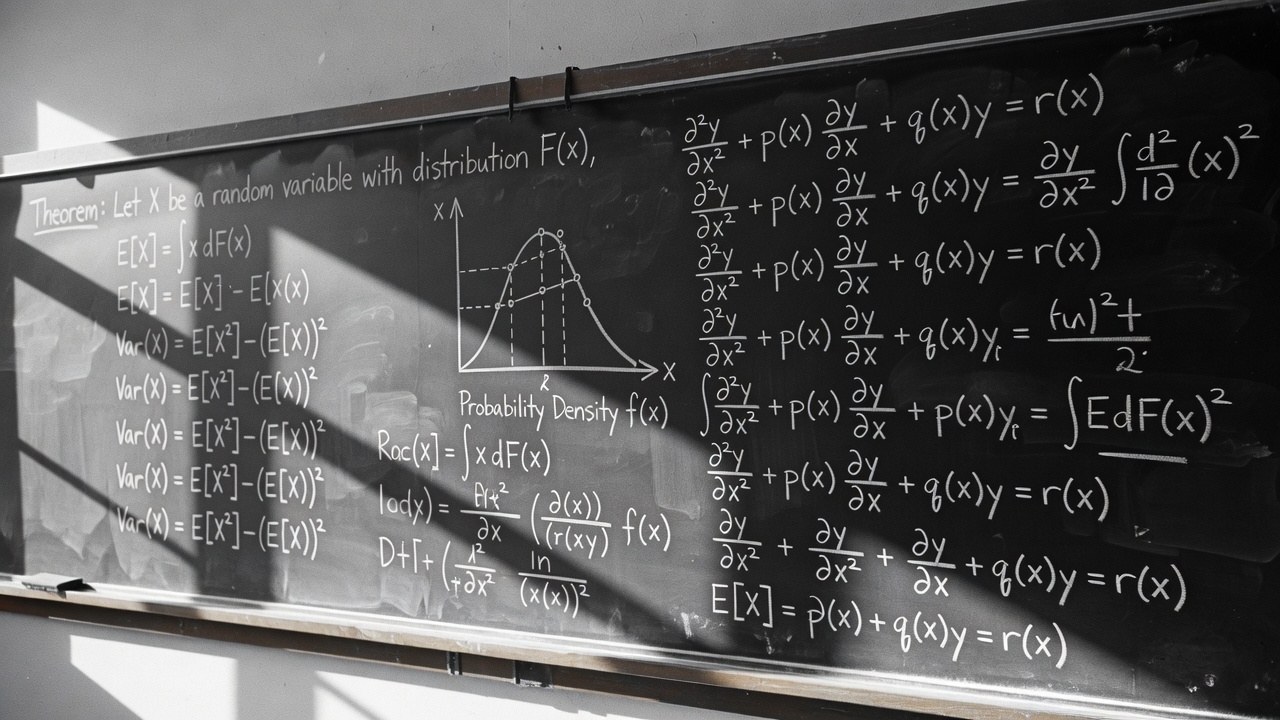
Edward Thorp published "Beat the Dealer" in 1962, and the book accomplished something remarkable: it took gambling out of the realm of folklore and placed it squarely in mathematics. The marketing around the book (and the casinos' panicked response) created the impression that Thorp had invented some miraculous system. He hadn't. What he had done was far more damaging to the casino industry: he had proven, with actual calculation, that blackjack was beatable.
The book's central claim was not mysterious. Blackjack is a game where the dealer's action is fixed by rule; the dealer must hit until reaching 17 and must stand on 17 and above (with minor variations). This rigidity creates asymmetry. The player makes decisions; the dealer follows rules. Given this structure, Thorp reasoned, you could calculate, for each possible player hand and each possible dealer up-card, the optimal action (hit, stand, double, split) that maximized expected value. This optimal strategy, when played consistently, would reduce the house edge from roughly 2.5 percent down to around 0.5 percent. Already, without counting a single card, the house edge plummets.
Then Thorp added counting. If you track which cards have been dealt, you can estimate the composition of the remaining deck. When the remaining deck is rich in tens and aces, the player gains advantage. When it is rich in small cards, the dealer gains advantage. Counting allows you to adjust your bet size. Bet small when the deck favors the house; bet large when the deck favors you. This does not guarantee a win on any single hand. It creates a positive expected value across a large sample of hands. The financial implication: at scale, the counter should win.
The Economics of the Realization
What Thorp demonstrated, with appalling clarity to casino operators, was that their entire economic model for blackjack assumed players would play poorly. The house edge existed only because most players made bad decisions (hitting 12 against a dealer 3, refusing to split 8s against a dealer 5). Given optimal play, that edge compressed. Given optimal play plus counting, it reversed. The casinos' first response was confusion. Their second was denial. Their third was action.
The book's popularity created what we might call a counterfactual. Casinos could have adapted by changing the rules (paying 6:5 on blackjack instead of 3:2, dealing from a single deck, burning more cards). Instead, they largely did not. They hired surveillance teams. They trained pit bosses to identify counters. They issued the famous "undesirable patron" lists. They banned players suspected of counting, sometimes without evidence. This was not a rational response based on cost-benefit analysis. This was an industry in shock, overreacting.
Here is the element of the Thorp story that the popular narrative misses: the actual mathematical advantage created by counting is small. We are talking about 1 to 2 percent over the house. This is meaningful at casino scale, where millions of dollars flow through, but it is not the "beat the house" fantasy the book title suggested. A skilled counter working a standard 8-deck shoe might return about 1 percent edge. Over 100 hands at $100 per hand, that is $100 in expected profit. Over a thousand hands, $1,000. Over 10,000 hands, $10,000. The math works, but the time horizon is long, and variance can devastate an undercapitalized counter.
The book also contained a significant error: Thorp's counting system was more complex than later systems. The "Hi-Lo" count, which came after Thorp's publication, achieved roughly equivalent results with far simpler mental bookkeeping. This matters for the real-world question of whether a person can actually execute the strategy without errors. Thorp's system required precision that many failed to maintain.
The lasting insight from "Beat the Dealer" was not the specific system but the principle: any game with fixed rules and imperfect information can be solved with mathematics.
What did the book cost casinos? Probably not as much as they feared. The regulatory response (multiple decks, poor shuffles, card-burning) probably cost them more than the counters ever extracted. And the infrastructure they built to catch counters (sophisticated surveillance, trained staff, black books) represented a permanent fixed cost. In some sense, they reacted to Thorp's book by making their operations more expensive without necessarily becoming more profitable.
The book's cultural impact was different from its practical impact. "Beat the Dealer" created the archetype of the casino villain: the brilliant outsider using mathematics to steal from the house. This appealed to mid-century anxieties about expertise, technology, and whether large institutions could be gamed by individuals with sufficient sophistication. The book validated the fantasy that a regular person, armed with knowledge and discipline, could beat a billion-dollar machine.
In practice, most people who read the book and tried counting either got caught, gave up, or made minimal profit. The barrier to success was not understanding the theory; it was the psychological endurance of playing mechanically, the bankroll required to survive variance, and the sustained focus needed to count accurately across 8-deck shoes in casinos designed to distract. Thorp's book assumed these problems away. The reality was messier.
Yet the book's legacy is unshakeable. It established that casinos were not magical money-laundering operations but discrete mathematical systems, and discrete mathematical systems could be solved. That insight, however imperfectly realized in practice, changed gambling culture permanently.
Keep reading
Same market
 HistoryClosing Line Value Calculator: The Math Behind CLV
 GuidesUnderstanding Slot Variance: A Player's Guide
 SlotsBet Size Matters More Than Spin Count
 Live CasinoDeal or No Deal Live: Rules and Expected Value
 GuidesMMA Style Matchups: What The Numbers Miss
 Sports BettingSame-Game Parlays: Fun, But Are They Profitable