
The Best Way to Learn Baccarat Without a Coach
Baccarat is a simple game in its rules and infinitely complex in what it reveals about the bettor's assumptions.

Socrates never played baccarat, but he would recognize what the game teaches. In baccarat, the bettor must answer a fundamental question: do I believe the next hand belongs to the Banker or the Player? That question contains all philosophy.
The bettor's answer reveals what they believe about probability, about pattern, about causality. Some bettors believe in hot streaks (Banker has won four times, therefore Banker is hot). Some believe in cold streaks (Banker has won four times, therefore Player is due). Both are wrong identically.
The First Principle
Every hand of baccarat is independent. The previous eight hands have no information about the ninth. A coin flipped eight times and landing heads does not make tails more likely. Probability has no memory.
Yet human minds have memory. We see patterns. We construct narratives. "Banker has been winning," so Banker will continue. Or "Banker has been winning, so Player is due for a run."
Baccarat teaches you to distrust these narratives.
The Mathematics
Banker wins 50.68 percent of hands (on average, accounting for ties). Player wins 49.32 percent. This edge is not enormous. It is consistent over thousands of hands, but volatile over dozens.
If you bet Banker every hand for a thousand hands, the expected result is you win roughly 506 hands and lose roughly 494. The house takes a commission on Banker wins (typically 5 percent). Net expected loss is roughly 14 units per thousand hands.
That is the mathematics. The expected loss is real and inevitable. It does not change based on your conviction or your emotional temperature.
Learning Without Coaching
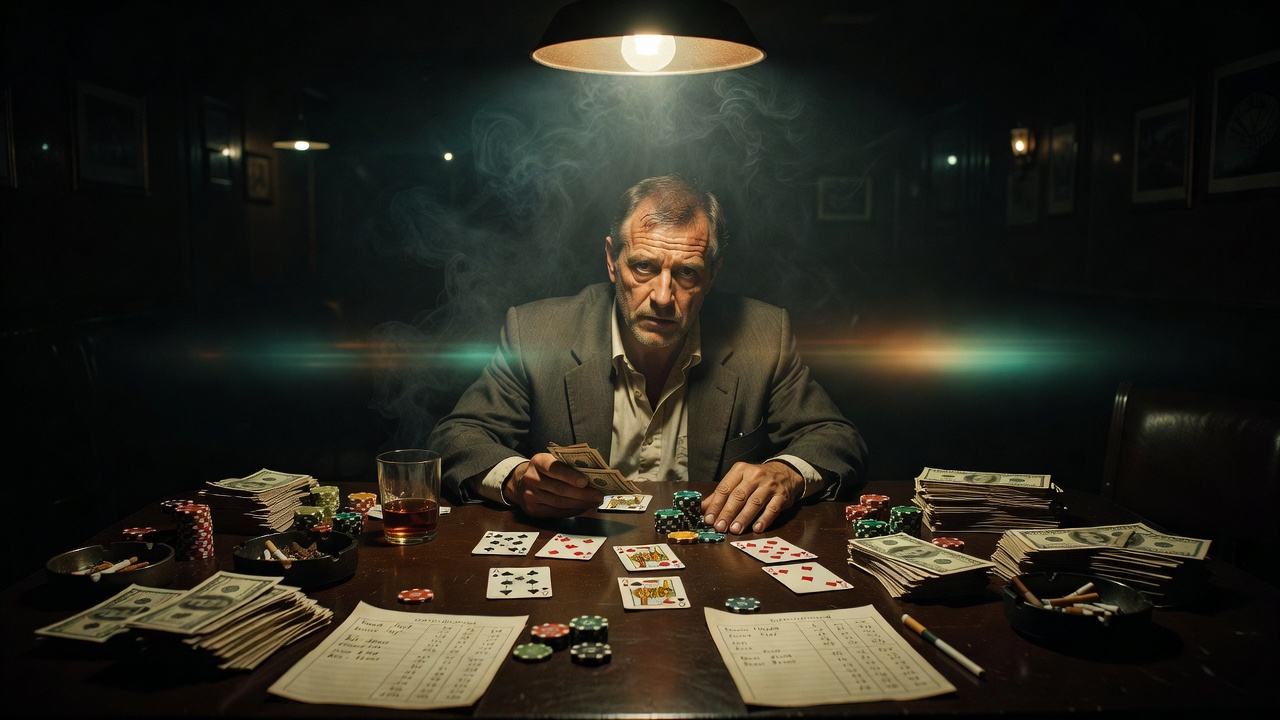
To learn baccarat without a coach, you must become your own observer. Play free-play games (offered by most online casinos) without money. Record your predictions before each hand. After the hand resolves, check whether you were right.
Keep records. Do not trust memory. After fifty hands, calculate your accuracy. Did you predict correctly 50 percent of the time (chance)? 52 percent? 48 percent?
If you are at exactly 50 percent accuracy, you have learned the fundamental lesson: your prediction ability is indistinguishable from random chance. That is the whole game.
The Pattern Detection
Your brain will try to find patterns. After the twenty-seventh hand, you will think: "Banker has been appearing more often in recent hands." Check the data. Is this true? How much more often? Is it within normal variance?
Variance will produce streaks. Variance will produce apparent patterns. Your job as a learner is to distinguish between pattern and statistical noise. That requires data, not intuition.
The Emotional Component
Baccarat teaches a secondary lesson: how you behave when money is involved. Play baccarat with play-money chips. Then play with real small stakes (one pound per hand). Track whether your decision-making changes.
Most people's decision-making degrades when real money is involved. You become tighter. You become superstitious. You chase losses. These are real human facts.
Learning baccarat means learning these facts about yourself before they cost you money.
The Socratic Answer
Socrates asked questions and revealed that confident people often do not know what they think they know. Baccarat asks: do you know whether the next hand is Banker or Player?
If you are honest, the answer is: I have a guess, not knowledge. A 50-50 guess in a game with a house edge. That is what baccarat is. Learn that first, and everything else is details.
Keep reading
Same market
 HistoryClosing Line Value Calculator: The Math Behind CLV
 GuidesUnderstanding Slot Variance: A Player's Guide
 SlotsBet Size Matters More Than Spin Count
 Live CasinoDeal or No Deal Live: Rules and Expected Value
 GuidesMMA Style Matchups: What The Numbers Miss
 Sports BettingSame-Game Parlays: Fun, But Are They Profitable