Max Win Caps in Slots: What They Mean for Players
Some slots advertise infinite upside. Then you check the fine print and find a maximum win. This is how that works.
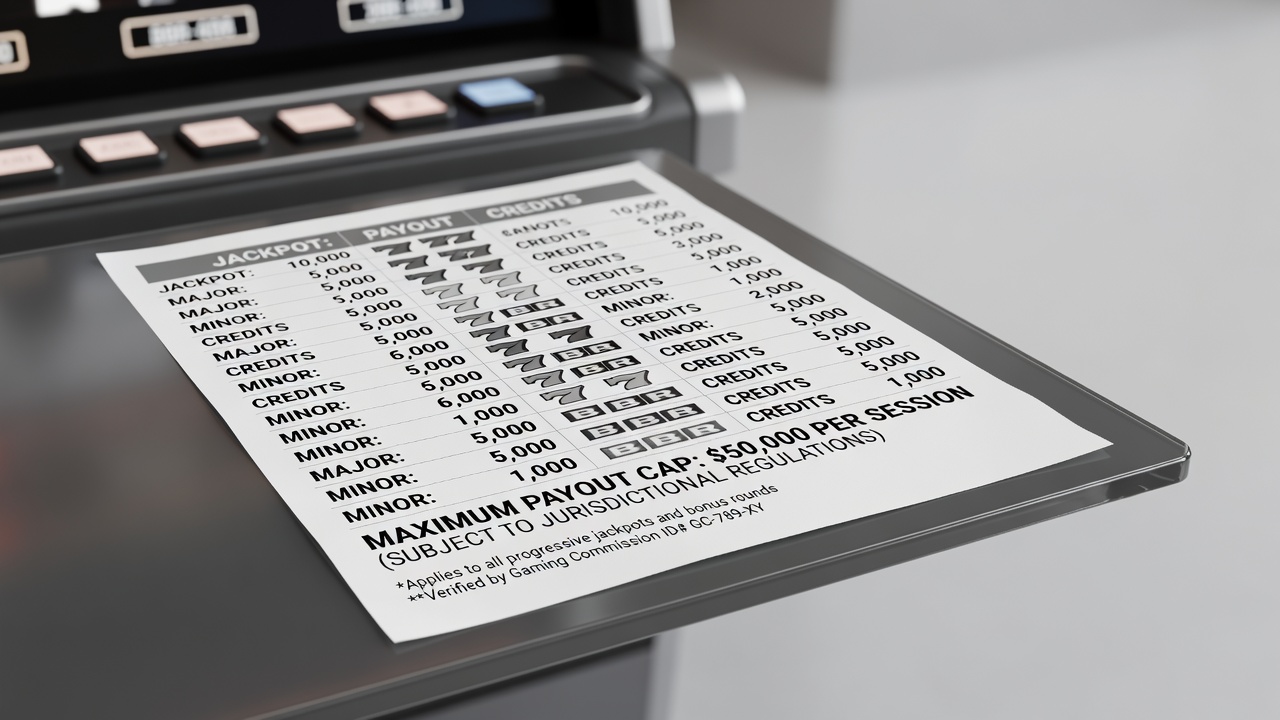
A max win cap is what it sounds like: a ceiling on how much you can win from a single spin. You might see "max win 5,000x your bet" or "maximum possible payout 100,000 coins." This is the regulator's and the operator's way of managing volatility. For you it means something else: a hard limit on your upside.
The paytable might show a jackpot that pays 10,000x. But the max win cap might be 5,000x. One of these numbers is fake. Guess which one you cannot actually win.
Why do they exist? Because without them, a single catastrophic spin could bankrupt an operator. Imagine a 1,000-payline slot where you bet $100. A theoretical maximum payout without a cap could exceed a million dollars. Operators cannot hedge that; they cannot buy insurance on it. So they impose caps.
The cap is usually disclosed in fine print. Some operators hide it deeper than others. You need to read the entire terms section to be sure. "Max win of 10,000 coins" is common. Sometimes it is "max win 100x your stake" or "limited to 500,000 total payout per spin." The wording varies but the concept is identical.
How Caps Change Game Design
Once you understand the cap, the game's actual variance becomes clear. A slot advertising a million-coin jackpot but with a 100,000-coin cap is designed to feel hopeful but deliver capped outcomes. The massive jackpot is marketing. The cap is the reality.
High-volatility slots are where caps matter most. A volatile game promises large payouts but rarely hits them. A cap essentially admits that some of those theoretical payouts will never actually be distributed. The payout table is a fiction; the cap is the truth.
Low-volatility slots with caps feel less constraining because big payouts are rare anyway. The cap exists but you rarely approach it. A mid-volatility slot with a tight cap feels punitive; you hit the feature, see a multiplier, and then realize the cap is preventing the multiplier from actually being applied.
Some operators cap by bet size. You might see "max win 2,000x your bet." Others cap in absolute currency. "Max win $1,000." A $1,000 cap on a 10-cent bet is generous; on a $50 bet it is restrictive. The same word, "max," but vastly different impact depending on your stakes.
A max win cap reveals something true: casinos are afraid of specific outcomes. When they cap something, they are admitting they cannot afford to pay it.
Regulatory bodies in some jurisdictions mandate caps. The Malta Gaming Authority imposes maximum win limits on certain games. The UKGC has similar requirements. This is not the operator choosing to cap; it is the regulator requiring it. So the cap is often a compliance minimum, not a commercial choice.
For players, this matters for strategy only if you are chasing the top prize. If you are spinning for entertainment or using a specific unit strategy (flat betting, stop-loss), the cap is irrelevant. You will never hit it. But if you are targeting the big jackpot, the cap is the real target. Know what it actually is before you play.
Markets in this line
Keep reading