
The Rise of VR Table Games: What to Expect
Virtual reality casinos let you lose money in three dimensions. The experience is immersive. The mathematics are unchanged.
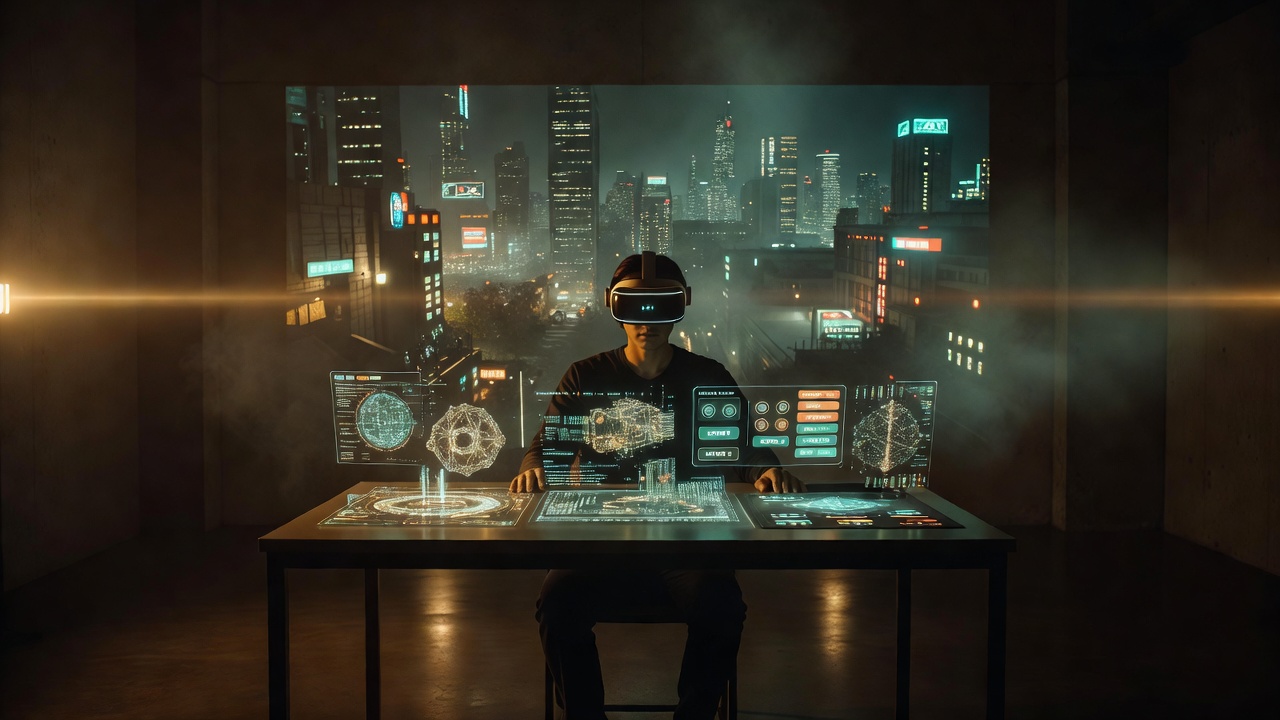
Virtual reality casinos are coming. They are also already here. Meta, Decentraland, Roblox all have functioning casino spaces where players can sit at tables and lose money whilst wearing a headset. The graphics are improving. The avatars are becoming less uncanny. The tables feel like tables. And yet the core transaction is identical to logging into PokerStars from your laptop. You deposit money. You play a game with negative expected value. You either withdraw winnings or accept losses. The VR coating changes nothing.
But let us examine what actually happens in a VR casino. You put on a headset. You are standing (or sitting, depending on your rig) in a facsimile of a Monte Carlo salon. Other players are represented as avatars with realistic arm movements, hand gestures, chip stacking. The dealer is an avatar too, or sometimes a live dealer video feed overlaid into the VR environment. The table is three dimensional. The cards have depth. The chips have weight in the sense that they are rendered with physics. You can zoom in on a card, read it clearly, turn it over. The immersion is disorienting at first.
Roulette is a natural fit for VR. The wheel is beautiful in three dimensions. You can watch the ball from multiple angles. You can follow it through the spins. Some VR casinos let you choose camera angles: behind the wheel, above it, inside it, wherever you prefer. The experience feels real because the primary interaction is visual. You place a chip on the layout and watch the wheel. This is what roulette does. Virtual or not.
The Table Games That Translate Well
Blackjack in VR is marginally different from blackjack on a screen. You see the cards in three dimensions. The dealer is present as an avatar. You can chat with other players at the table. But the game is still you pressing buttons to hit or stand. The VR adds presence, not agency.
Poker in VR is slightly different. You can see other players' body language (simulated through avatar animation). You can watch their reactions. Poker is a game of reading tells, and tells exist in the physical space more than the digital space. A player who hesitates before betting might twitch their avatar slightly. A player who is bluffing might move their chips in a particular rhythm. These micro-behaviors exist in real poker. In VR poker, they are programmed in or fake. It is ambiguous whether you are reading genuine behaviour or theatre.
Baccarat in VR is aesthetically superior to baccarat on a screen. The squeeze (where a dealer slowly reveals the card) is more dramatic in three dimensions. You anticipate the flip. You feel the tension. But baccarat is a two-choice game: banker or player. The theatre does not change the mathematics. Your expected loss is still 1.06% on banker bets, accounting for commission.
Why Immersion Does Not Equal Better Odds
There is an unspoken belief that the more immersive an experience is, the better it must be. Evolutionary psychology: if something feels real, it is real. This is not true of gambling. A VR casino wearing the UKGC licence has the same RTP as its web equivalent. The house edge is static. The immersion is cosmetic. You are not getting better odds because you wore a headset.
What you are getting is enhanced engagement. Studies in gambling behaviour show that immersive experiences increase time on site. Longer sessions produce higher cumulative losses. The VR casino is not designed to pay you better. It is designed to keep you playing longer.
The current VR casinos are concentrated in unregulated or poorly regulated jurisdictions. Meta Horizon has gaming experiences but not real-money gambling. Decentraland has real-money tables. Stake (a Curaçao operator) runs VR blackjack and roulette. The regulatory ambiguity allows these platforms to operate without the compliance burden of traditional licensed casinos.
What Actually Gets Built
The games that work best in VR are the ones where the physical presentation adds value. Live dealer games translate perfectly because the dealer is already a video feed. You just wrap the VR environment around the dealer camera. Roulette translates because the wheel is inherently three-dimensional and dramatic. Blackjack translates because it is simple. Slots do not translate well because a virtual one-armed bandit is the same as a digital representation. The immersion adds nothing.
The future of VR casinos is likely specialization. Social casinos with small-stakes games built for immersion. High-stakes VR poker rooms for serious grinders. Live dealer integration for operators who already have broadcast infrastructure. But none of these will change the fundamental property: the house edge is baked into the rules, not the presentation.
Markets in this line
Keep reading
Same market
 Live CasinoDeal or No Deal Live: Rules and Expected Value
 Live CasinoLive Dragon Tiger: The Simplest Table Game You'll Ever Learn
 Live CasinoLa Partage in French Roulette: Definition and Function
 GuidesLive Dealer Casino Explained: How It All Works
 Live CasinoSqueeze Baccarat: Why the Slow Reveal Is So Popular
 Live CasinoVIP Live Dealer Tables: What Higher Limits Really Mean