
How AI Dealers Could Change Online Table Games
AI dealers would reduce labor costs for operators. They would also raise regulatory questions about RNG verification and player protection.
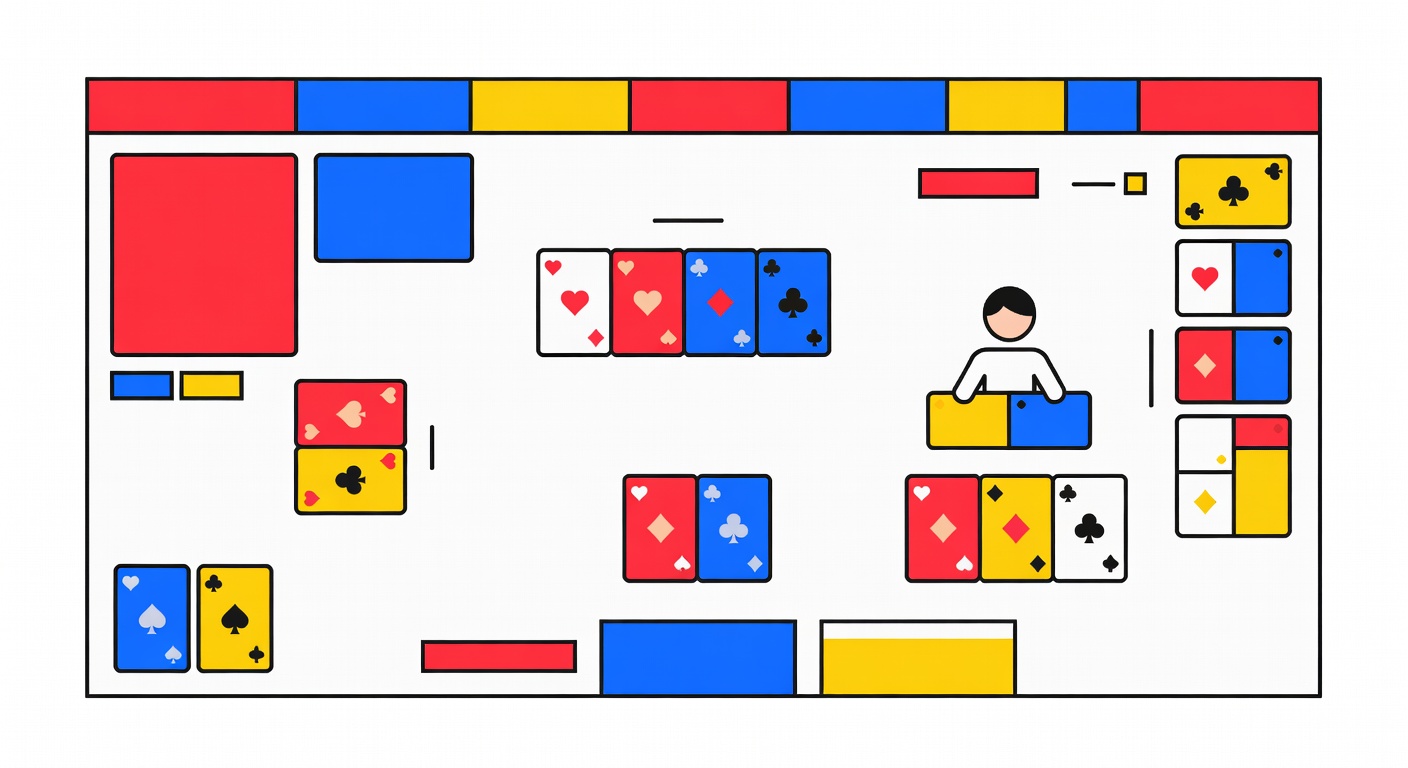
Online table games currently employ human dealers broadcast via video stream. Evolution Gaming operates studios in multiple jurisdictions with thousands of dealers. The operation is expensive. AI dealers would reduce this cost dramatically.
The Malta Gaming Authority, the primary regulator for European online gaming, has not yet authorized AI dealers for live table games. However, the technical feasibility is established. The regulatory pathway is being considered.
The Current Structure
Live dealer studios are staffed operations. A dealer manages two to four tables simultaneously. Each stream feeds to multiple players. The dealer is licensed. The dealer's identity is verified. The dealer works under house rules and surveillance.
Evolution Gaming alone employs approximately 8,000 live dealers across studios in Romania, Latvia, and other jurisdictions. The cost per dealer is approximately 20,000 to 30,000 euros annually in lower-wage jurisdictions, plus overhead. Studio operations, rent, surveillance equipment, and management add another 50 to 100 percent overhead.
The total cost of a live dealer network at this scale is substantial. An AI dealer would be a software license with marginal costs approaching zero.
The Regulatory Framework Question
Random Number Generation (RNG) for card games requires certification. The RNG must be fair, auditable, and unmanipulated. A human dealer shuffles and deals physical cards; the randomness comes from physical shuffling and no hidden mechanism.
An AI dealer would use an underlying RNG to determine outcomes. This RNG would require certification equivalent to any electronic casino game. However, the AI dealer would present itself as dealing physical cards. The player would see shuffling and dealing, not a black box RNG.
The regulatory question is: does presenting an RNG result through a simulated dealer interface constitute legitimate live dealing, or does it constitute misrepresentation of the game format?
The Malta Gaming Authority requires that licensees disclose the mechanisms underlying their games. If a game is RNG-based, it must be disclosed. If an AI dealer is dealing cards based on an underlying RNG, that fact must be disclosed to players.
The KYC and AML Implications
Current live dealers do not personally verify customer identity. Verification happens through account creation and document upload. The dealer is simply a human interface to the game.
An AI dealer would have no ability to verify identity beyond what the system already does. This does not create a regulatory gap; it simply removes the human from a role where the human was not actually doing identity verification.
Anti-money-laundering (AML) detection happens at the account level, not at the table level. An AI dealer does not change AML monitoring. The system behind the AI dealer would still flag suspicious account activity.
Player Protection Mechanisms
Responsible gambling tools would need to function identically with AI dealers. Session time limits, deposit limits, and self-exclusion would operate as they do now. The interface would change (AI dealer instead of human dealer), but the protections would remain.
One potential advantage: an AI dealer could enforce time-outs more reliably. If a player has triggered a loss limit, the AI dealer could stop accepting bets. A human dealer might be persuaded to make an exception. An AI would not.
The Competitive Pressure
Once one major jurisdiction authorizes AI dealers, the economic pressure on other operators becomes intense. If DraftKings operates AI dealers profitably at 50 percent reduced cost, competitors face pressure to match or lose margin.
This creates a jurisdictional race. The regulator that first authorizes AI dealers gains competitive advantage for their licensed operators. Other regulators face pressure to follow. The Malta Gaming Authority is aware of this dynamic.
Implementation Timeline
AI dealer technology is ready now. GPT-based language models can conduct dealer patter ("Double down?" "Hit or stand?") with minimal scripting. Animation systems can render convincing shuffling and dealing. Camera angles can be fixed. The technical pieces exist.
The regulatory timeline is uncertain. The Malta Gaming Authority is considering draft guidance, but has not released formal rules. The process typically takes 12 to 24 months from guidance release to regulatory approval for new technologies.
If the MGA approves AI dealers in 2026, major operators could deploy them in 2027. The transition would not be immediate; human dealers would remain for market segmentation. Premium tables might retain human dealers for brand positioning. Economy tables would use AI.
The Market Reality
Once authorized, AI dealers will be deployed. The cost savings are too large to ignore. Operators will market human dealers as a premium offering and AI dealers as the standard. Players will choose by preference and price sensitivity.
The regulatory framework that emerges will influence player protection and game fairness standards. A regulator that approves AI dealers with minimal oversight is failing its mandate. A regulator that imposes rigorous RNG certification and disclosure requirements on AI dealers is functioning correctly.
The Malta Gaming Authority has not yet decided. The decision will shape the European online table game market for the next decade.
Markets in this line
Keep reading
Same market
 Big WinsTerrance Watanabe's $127 Million Loss at Caesars Palace
 Live CasinoDeal or No Deal Live: Rules and Expected Value
 Sports BettingHow Technology Is Reshaping the Sports Betting Industry
 Live CasinoLive Dragon Tiger: The Simplest Table Game You'll Ever Learn
 Live CasinoLa Partage in French Roulette: Definition and Function
 Big WinsThe 1919 Black Sox Scandal: Baseball's Biggest Fix