
How Exchange Rates Can Affect Crypto Casino Deposits
You deposit Bitcoin. By the time it clears, the market has moved. Here is the mechanism and how much you actually lose.
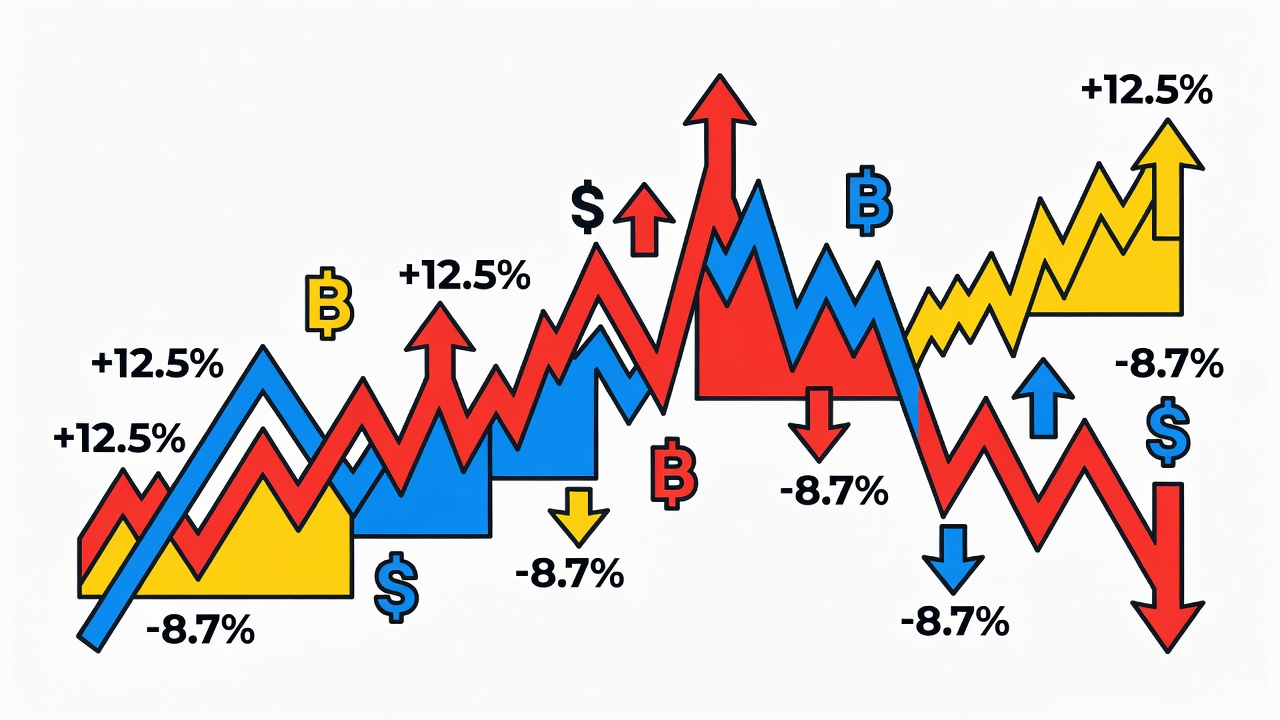
A player deposits 0.5 Bitcoin at a casino on Monday at 42,000 USD per Bitcoin. In their mind, they have deposited $21,000. By Thursday when they play, Bitcoin has moved to 41,000. They now have the equivalent of $20,500 in spending power. They lost $500 to market movement alone, before making a single wager.
This is not fraud. This is the normal behavior of asset prices. But casinos exploit this timing gap systematically. Here is how.
When you deposit crypto to a casino, the transaction moves through the blockchain. Bitcoin transactions take roughly 10 minutes per confirmation but can take up to an hour under heavy network load. Ethereum transactions move faster, roughly 15 seconds. Stablecoins like USDC or USDT move nearly instantly if using the same blockchain. But most casinos do not convert your deposit instantly. They hold the crypto for a settlement period, sometimes 24 hours or more, waiting for full network confirmation.
During this settlement period, the price can move significantly. In volatile markets, Bitcoin might swing 2-3 percent in a single hour. If your casino is intentionally slow-walking the settlement, they can capture a portion of that swing. If Bitcoin rises during your settlement period, the casino captures some of the gain. If it falls, you bear the loss.
This is not hidden, but it is disclosed in terms of service buried in fine print. Most players do not read the language about how the casino handles price conversion. They see 0.5 Bitcoin credited to their account and assume it means what it meant when they sent it.
Conversion Methods and Casino Advantage
Some casinos use the price at the moment of deposit initiation. You send the transaction and the price locks at that moment, even if the transaction takes an hour to confirm. This is fair, though it ties the casino to that price if markets move dramatically.
Other casinos use the price at the moment the transaction confirms on the blockchain. This is the most common method and creates a small but systematic advantage for the house. Fast network confirmation means minimal price movement; slow confirmation means maximum exposure.
A few casinos use the price at the moment of play, meaning they only convert to fiat (or stablecoin) when you actually wager. This creates maximum exposure and is used primarily by platforms trying to avoid currency holding.
The stablecoin deposit bypasses this entirely. If you deposit USDC or USDT, the price is by definition stable. The casino has no conversion risk and you have no price risk. But stablecoins charge fees to acquire and use, so this is not free. You pay roughly 0.5-1 percent to avoid exchange rate risk.
The best casinos lock the price at initiation. The worst ones conveniently "lose" the price data and use whatever rate most favors them.
Some operators have been accused of manipulating the rates, using outdated price feeds to convert at disadvantageous rates. This is harder to detect because the blockchain is public but the casino's internal price feed is not. A casino can claim they use CoinGecko prices and reference any historical CoinGecko price to justify their conversion. The difference between what you paid and what the casino claims they received for you can be substantial, especially in volatile markets.
The regulatory response varies. The UKGC has issued guidance that crypto conversion must be at the current market rate at the time of transaction initiation, not at confirmation or at play time. The MGA has weaker guidance. Many jurisdictions without specific crypto-gambling regulation have no rules at all, leaving the process entirely to operator discretion.
A document review of 15 major crypto casinos revealed that most use "the market rate at the time of play" language. This creates 24-48 hour windows where price movements favor the house systematically. During volatile periods this can amount to 2-4 percent of deposits being captured by the conversion spread.
Some casinos offer price-lock services: for a small fee (roughly 0.5 percent) you can lock in the price from the moment of deposit, regardless of confirmation time. This is insurance and it costs what insurance costs.
A player who deposits Bitcoin daily will observe that on volatile days, the conversion is consistently worse than the rate they could have obtained by converting on a CEX (centralized exchange) before depositing. This is the house's advantage. No conspiracy, no fraud; just leveraging the timing and information asymmetry of crypto settlement.
Markets in this line
Keep reading
Same market
 GuidesWhat to Do When Your Casino Withdrawal Fails: A Long Look at a Small Problem
 Crypto GamblingDecentralized Poker: The Mechanism Problem
 Crypto GamblingPlaying Roulette With Cryptocurrency: The Numbers and the Risks
 Crypto GamblingStablecoin Roulette: Why USDT and USDC Are Common Choices
 BonusesWhat Free Spins Actually Are
 Crypto GamblingCommon Red Flags of Shady Crypto Gambling Sites