
Decentralized Poker: The Mechanism Problem
Blockchain advocates propose trustless poker rooms. The mechanism is elegant. The incentives are not.
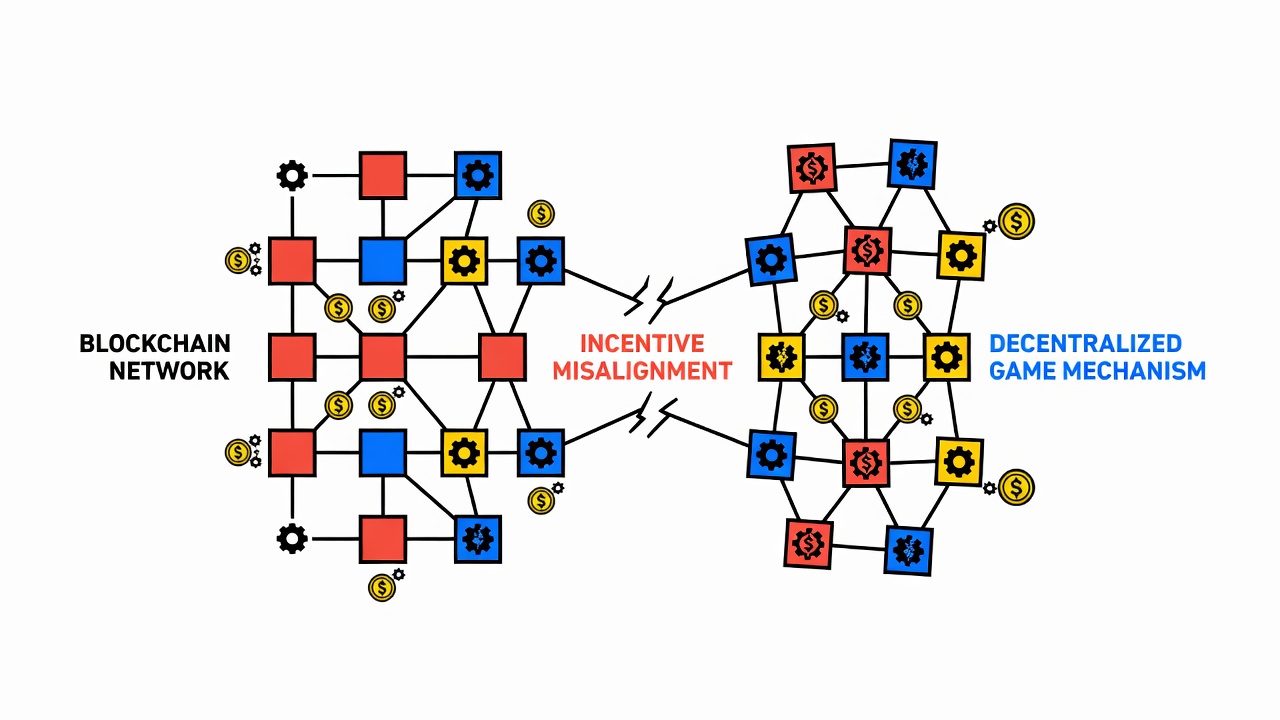
Decentralized poker has a genuine appeal. Players fund a smart contract. The contract shuffles a deck cryptographically. Players call and fold via the blockchain. All action is recorded and verifiable. No casino takes a house cut. No central authority controls the game. Sounds good.
The appeal rests on a false premise: that removing the middleman improves the game. In fact, the middleman solves a real problem. Decentralized poker tries to eliminate the middleman without solving that problem. The result is a system that looks trustless but creates perverse incentives.
The Mechanism: How Blockchain Poker Attempts to Work
Traditional poker requires a dealer who neither plays nor benefits from any outcome except the rake. The dealer's incentive is neutral. The dealer holds chips, executes the rules, and settles the pot. A dishonest dealer or a dealer with stake in the outcome destroys the game immediately.
Blockchain poker replaces the dealer with a smart contract. The contract cannot be dishonest. It executes exactly as written. Cards are shuffled using a random number generator verified on-chain. Bets are atomic. The winner is determined by the contract code. This is the promised security.
The problem emerges at the margin: collusion and information asymmetry. In a traditional poker room, two players cannot pre-agree to steal from the table (by checking down a side pot or signaling holdings). A vigilant dealer spots this or it does not happen because the penalty is known. In a blockchain game, collusion is invisible until it is visible. And the punishment is what, exactly?
A blockchain is immutable. Actions cannot be reversed. If two players collude to manipulate a hand and the contract executes as written, the money transfer is permanent. The victim's recourse is to stop playing. The collusion persists in the record forever. There is no arbitration, no dispute resolution, no human judgment. The code is law and the code does not care if the game was rigged.
The Discount Rate Problem
Austrian economics teaches that time preference and discount rates are fundamental. A player in a traditional poker room values the certainty of a fair game today over the uncertain possibility of technical fairness tomorrow. The casino extracts rake in exchange for this certainty. The rake is a discount rate on patience and risk.
A blockchain game offers technical fairness but operational uncertainty. Your funds are in a smart contract controlled by code, not by people. If the contract has a bug, the money is gone. If the random number generator is predictable, the game is rigged. If you lose, your appeal goes to a GitHub discussion board, not to a casino manager.
Most players discount this uncertainty at a rate higher than the traditional casino rake. They prefer to pay 5% juice to a regulated room with a manager and a phone number over 0% juice to a decentralized contract they cannot sue.
The Sybil Problem and Marginal Utility
In traditional poker, the cost of cheating is expulsion and reputation loss in a known community. Communities have history and memory. Venues have owners who care about their reputation. Cheaters are banned.
In decentralized poker, accounts are pseudonymous and costless to create. A wealthy player with access to a custom smart contract can run many accounts in the same game, collude between them, and vanish. The contract records the theft. But the thief is anonymous. The victim cannot recover. The system works as designed. The problem is that it is designed to the specifications of the cheater, not the honest player.
Some decentralized poker protocols attempt to solve this with reputation systems or staking requirements (you must collateralize account creation). But collateral can come from the same treasury. Sybil attacks remain a cost of playing.
The Question of Marginal Value
The Austrian tradition asks: what is the marginal value of decentralization to the poker player? The honest answer is minimal. A poker player cares about four things: fair shuffles, accurate hand evaluation, fast settlements, and community. Traditional poker delivers all four. Decentralized poker delivers one reliably (accurate hand evaluation) and introduces new risks on the others.
A fair shuffle in a blockchain game requires a random number generator that is neither predictable nor manipulable. Proving this is mathematically non-trivial and most players cannot verify it. They must trust the protocol developers, which is exactly the trust they were trying to avoid.
Fast settlements are impossible in decentralized poker because blockchain confirmation times range from seconds to minutes. Traditional poker settles instantly. The wait creates a material difference in experience.
Community is destroyed by anonymity. A poker room where you never see the same name twice is not a community, it is a market. Markets have lower social overhead, higher information asymmetry, and higher probability of predation. Professional poker players prefer communities. Decentralized design actively prevents community formation.
Where It Actually Works
Decentralized poker has one legitimate use case: players with no access to legal poker rooms or rooms they do not trust. A player in a jurisdiction where all casinos are state-controlled and corrupt might prefer trustless code to a rigged centralized venue. The marginal utility is real in such cases.
For players with access to licensed, regulated poker rooms, the value proposition of decentralization is negative when all costs are accounted for. The traditional casino extracts less total value than the combination of a worse user experience, higher variance, and greater vulnerability to subtle attacks in a blockchain system.
The elegant mechanism becomes a costly ornament.
Markets in this line
Keep reading
Same market
 PokerMolly's Game: The Real Story Behind the Hollywood Poker Nights
 CelebritiesPamela Anderson's Poker Losses and Baywatch Paychecks
 Crypto GamblingPlaying Roulette With Cryptocurrency: The Numbers and the Risks
 Crypto GamblingStablecoin Roulette: Why USDT and USDC Are Common Choices
 Crypto GamblingCommon Red Flags of Shady Crypto Gambling Sites
 Crypto GamblingBitcoin Deposits at Online Casinos: The Basics