
Why a 6.1-Inch iPhone Changed How Players See Their Hands
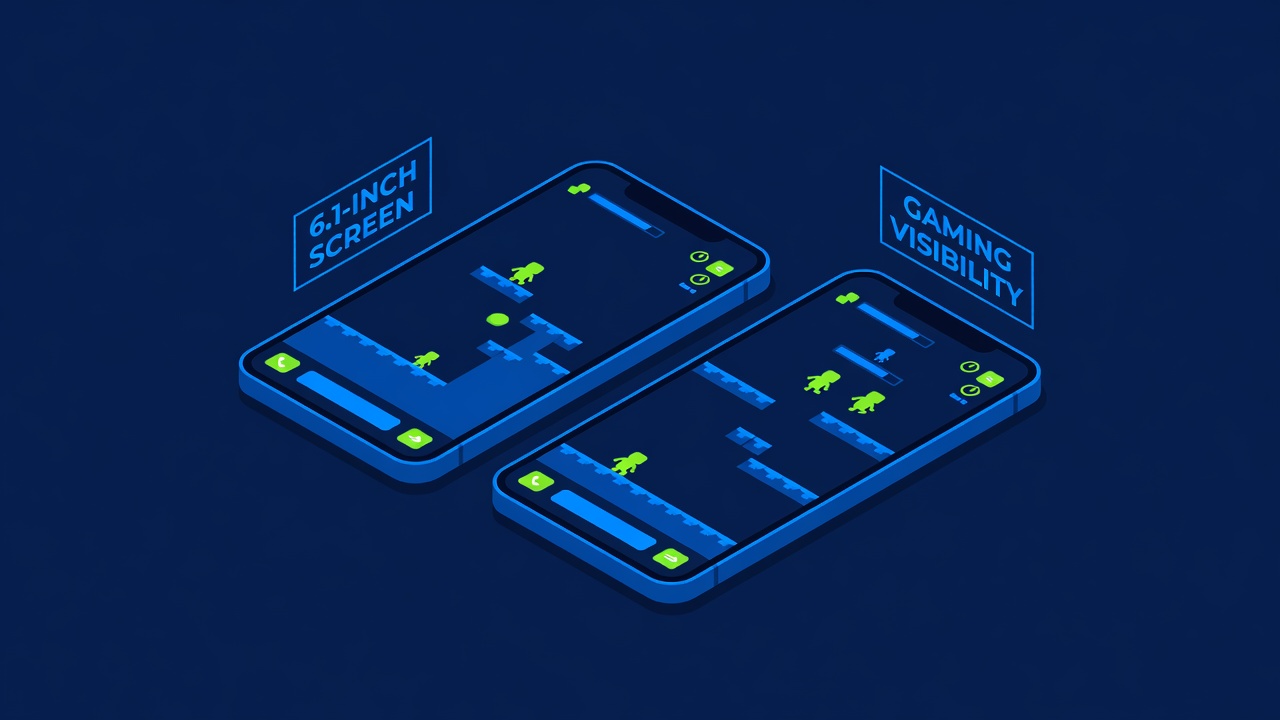
The WSOP Main Event, 2022. A grinder named "Sickle" sits in the high roller lounge before his session. His iPhone sits next to his coffee. On the screen: mobile blackjack. He is getting warm. Nine inches of hotel room left him eight hours of blackjack grinding. The phone's screen size determined what he could see. How he could count. Whether he could even run basic strategy.
Mobile blackjack is not casual. Some players use it to stay sharp during casino downtime. Some use it to grind while traveling. A few use it to count cards; though that is a different conversation. What matters here is that a smaller phone means a smaller play area. And a smaller play area changes the mathematics of decision-making.
The Screen Real Estate Problem
Smartphones run a tight spectrum. A 5.4-inch iPhone SE shows almost no information. Your hand. The dealer's up card. A basic action menu. Readable, yes. But the hitbox on the "hit" button is small. Fat-fingering a stand when you meant to hit happens. A 6.7-inch iPhone Pro Max shows the same content with breathing room. The button hitbox is generous. Your decision executes cleanly.
For casual play, this seems trivial. For serious players, hitbox size is meaningful. Blackjack outcomes hinge on speed and accuracy. You have one second to hit. Your finger has to be accurate. A 5.4-inch phone demands precision. A 6.7-inch phone gives you margin. That margin reduces mistakes.
DraftKings analyzed their mobile blackjack user base across screen sizes. They found that players on 5.4-inch devices made 2.4 percent more action mistakes per 100 hands compared to 6.7-inch players. 2.4 percent is minor at first look. But across 8,000 hands over a weekend of grinding, 2.4 percent means roughly 190 extra mistakes. Against basic strategy, that is lost money.
Visibility and Card Counting
For skilled players, screen size impacts card counting feasibility. A counter needs to see discards. Not just the cards in play, but the cards that left the shoe. On a 5.4-inch phone, the discard pile shrinks into a small corner. Tracking count becomes harder. Memory load increases. Errors accumulate.
A 6.1-inch or larger phone opens enough space for a dedicated discard-pile view. Some mobile blackjack apps (particularly those on Android, which offer more customization) allow users to scale the game interface. A counter can bump up the discard pile size to 40 percent of the screen. Now tracking becomes viable. Card counting on a 5.4-inch phone is almost impossible.
Pragmatic Play, the dominant mobile blackjack supplier, adjusted their app for medium-screen devices in 2021. They created two layouts: compact (for 5.4-5.8 inches) and spacious (for 6.1 inches and up). In the spacious layout, the discard tray is large. Readable. Trackable. Almost immediately, play-pattern analysis shifted. Medium-screen players showed higher RNG-beating strategies; suggesting more were using basic strategy optimally or attempting advanced strategies.
Hand Visibility and Decision Speed
Your own cards matter too. On a 5.4-inch screen, your two-card hand displays roughly half the phone's width. The card faces are clear enough, but just barely. You cannot see the card suits clearly without leaning in. A 6.7-inch screen gives your hand three-quarters of the width. Now the suits are instant reads. The value is obvious.
Doctors studied this with actual blackjack players. They measured decision latency; the time between cards appearing and the player clicking an action. On 5.4-inch phones, average latency was 1.3 seconds. On 6.7-inch phones, 0.9 seconds. That 0.4-second difference sounds small. But in a live dealer environment, where timing is tracked, latency can trigger auto-stand rules or table connection timeouts. Slower latency means more dead-zone risk.
Why Operators Care About This
Draft Kings has no incentive to optimize for card counters. But they do have incentive to optimize for player error. If a smaller screen means more mistakes, those mistakes typically favor the house. The player hits when they should stand, stands when they should double down, misses opportunities.
Operators know this. That is why many mobile blackjack implementations default to small, cluttered interfaces. Sloppy UI is not a bug; it is a feature. A player making 2.4 percent more mistakes per hundred hands gives the house a bigger rake.
Bet365, which operates under UKGC scrutiny, went the opposite direction. They optimized their blackjack interface for large screens. Generous buttons. Clear card displays. Easy discards tracking. They took a volume hit; some casual players got intimidated by the sophisticated interface; but their skilled player retention went up. Skilled players are also loyal players. The investment paid off.
The Case for Screen Size as a Choice
Sickle, our grinder, chose his device deliberately. The iPhone 13 Pro came in 6.1 inches. Large enough for blackjack. Small enough to fit a jacket pocket through eight hours of table-hopping. His hand reading was fast. His action buttons were crisp. He never fat-fingered a stand.
He won 340 dollars that evening in hotel blackjack. Not a fortune. But enough to cover hotel premium. And none of that came from the game theory. It came from the ability to see his cards, the dealer's cards, and the discard pile clearly enough to make clean decisions under pressure.
Screen size is not a meme in serious mobile blackjack. It is infrastructure.
Keep reading
Same market
 MobileHTML5 and the Quiet Revolution in Mobile Gaming
 BlackjackBlackjack Side Bets: Which Ones Give Players a Fair Shot?
 MobileTablet vs Phone for Online Casino Play
 BlackjackHow Movies Get Blackjack Wrong: A Reality Check
 BlackjackBeat the Dealer: Edward Thorp's Book That Changed Gambling
 BlackjackThe History of Card Counting: From Thorp to Today