
Positively Fifth Street: James McManus at the WSOP
James McManus played in the 2000 World Series of Poker Main Event and wrote a book about it. The book raised questions about amateurs in professional poker.
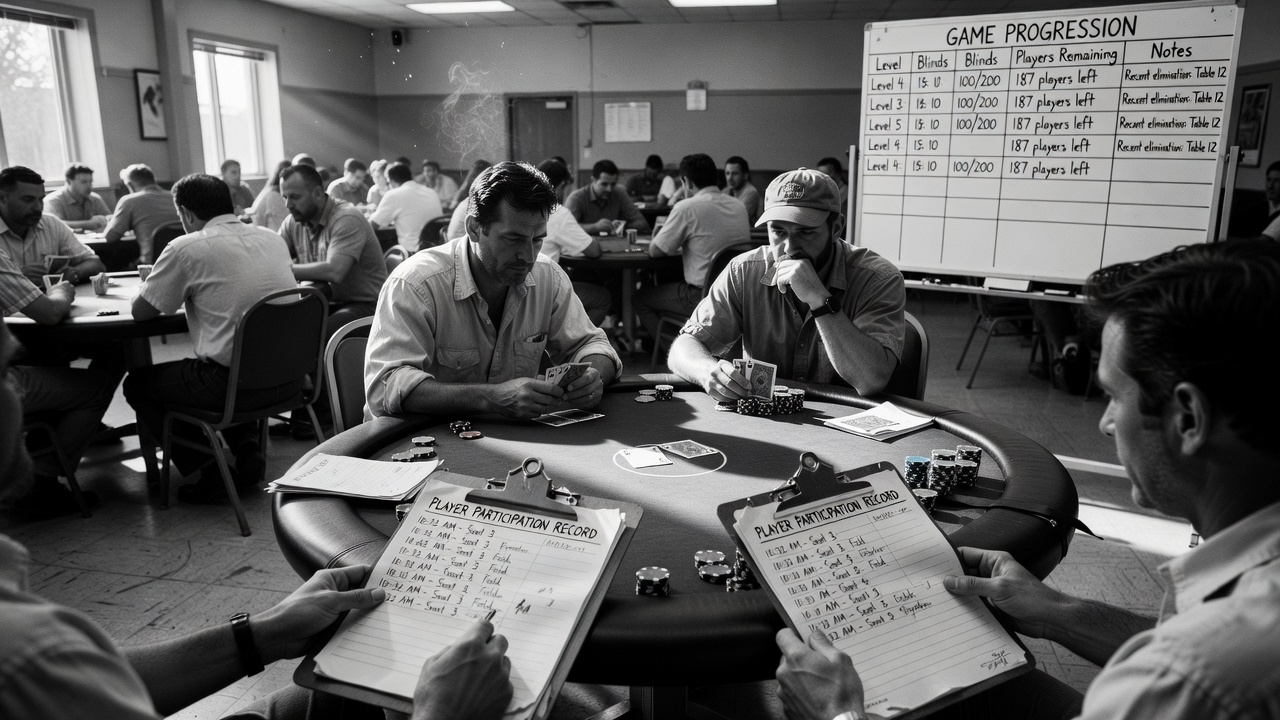
James McManus was a journalism professor who decided, on impulse, to enter the 2000 World Series of Poker Main Event. He had minimal poker experience. He was not a professional gambler. He sat down at a table with hundreds of experienced players. Then he wrote a book about it.
Positively Fifth Street (published in 2003) tells the story of McManus's run at the WSOP. He made the final table. He finished 5th. He won 247,000 dollars. His winnings funded the book's writing. The book became a bestseller. It introduced millions of non-poker players to the game's culture.
Here is what is interesting about this from an analytical perspective. McManus was a tremendous outlier. An amateur player entering a WSOP Main Event is nearly certain to be eliminated within the first two days. The Main Event typically starts with 5,000 to 10,000 players. Only 27 make the final table. The odds are brutal.
McManus made the final table. This was luck. Extreme, statistical luck. He ran good. He avoided bad beat after bad beat. He won crucial coinflips. He played reasonable poker (not great poker, reasonable poker) and the variance gods smiled on him.
The survivorship bias problem
The book's impact was massive precisely because McManus was an outlier. If 10,000 amateurs each wrote a book about their Main Event experience, one of those books would inevitably be about someone who final-tabled. That person would write a bestseller based on extreme luck. No one would read the 9,999 books about people who lost quickly.
McManus's success created a false impression among casual poker players. The impression was: "An intelligent amateur can learn poker and compete at high levels." This is technically true but extremely misleading. McManus did not learn poker and compete at high levels. McManus lucked into one of the most improbable outcomes in sports. Learning poker and competing at high levels takes years and extreme study.
After his WSOP success, McManus continued playing poker professionally for several years. His results were ordinary. He won some tournaments, lost most. He did not repeat his Main Event success. This is the expected outcome for someone whose WSOP finish was luck-based rather than skill-based.
What the book got right
McManus captured the atmosphere of the WSOP accurately. The grind of 12-hour poker days. The emotional swings. The characters (both professional grinders and amateur dreamers). The reality that poker is a subculture with its own values and hierarchies.
He also captured genuine strategic poker concepts. His description of hand ranges, pot odds, and position is mathematically sound. His introspection about why he made certain decisions is honest. The book is not bad poker writing. It is good poker writing by someone who did not fully understand the game's depths.
The book's greatest strength is its accessibility. A non-poker reader finishes Positively Fifth Street understanding what poker is, why people play, and what the mental game entails. For that purpose, it is excellent.
The longer-term impact
Positively Fifth Street arrived during the early internet poker boom. Online poker was exploding. Millions of casual players were learning poker through websites and books. The book fed that explosion. It made poker aspirational for the general public.
This created a wave of amateur players entering tournaments in the mid-2000s. Most of them were learning poker by reading books and playing online. Most of them lost money. Some went broke. A few persisted and became decent players. The overall effect was larger prize pools, more tournaments, and more professional opportunities in poker. But at the cost of substantial harm to recreational players who treated poker as a game to beat rather than entertainment to enjoy.
McManus was not responsible for how his book was interpreted, but the book did contribute to the mythology of poker as a beatable game. Many amateurs who read it thought: "McManus made it. I can too." Very few actually did.
The literary achievement
From a pure writing perspective, Positively Fifth Street is strong. McManus weaves his poker narrative with history (the Dead Man's Hand, Wyatt Earp), literary references, and personal reflection. It is not just a poker book. It is a meditation on luck, ambition, and what it means to compete.
The climax (his run to the final table) is genuinely suspenseful. You know he finished 5th (it is in the title and the back cover), but the narrative tension is real. How does he get there? What decisions does he make? What luck does he need? McManus answers these questions well.
For a casual reader, Positively Fifth Street is one of the best books about poker ever written. For a professional player, it is a cautionary tale about luck masquerading as skill. For a poker industry observer, it is a historical document of the pre-Black Friday online poker era.
Markets in this line
Keep reading
Same market
 Big WinsImplied Probability Formula for Every Odds Format
 HistoryClosing Line Value Calculator: The Math Behind CLV
 Big WinsTerrance Watanabe's $127 Million Loss at Caesars Palace
 GuidesUnderstanding Slot Variance: A Player's Guide
 SlotsBet Size Matters More Than Spin Count
 Live CasinoDeal or No Deal Live: Rules and Expected Value