
Do Slot Machines Have Hot and Cold Streaks? The Truth About RNG
Players believe slots get hot and cold. The underlying mechanism is a pseudorandom number generator that cannot remember the past. The belief persists anyway.
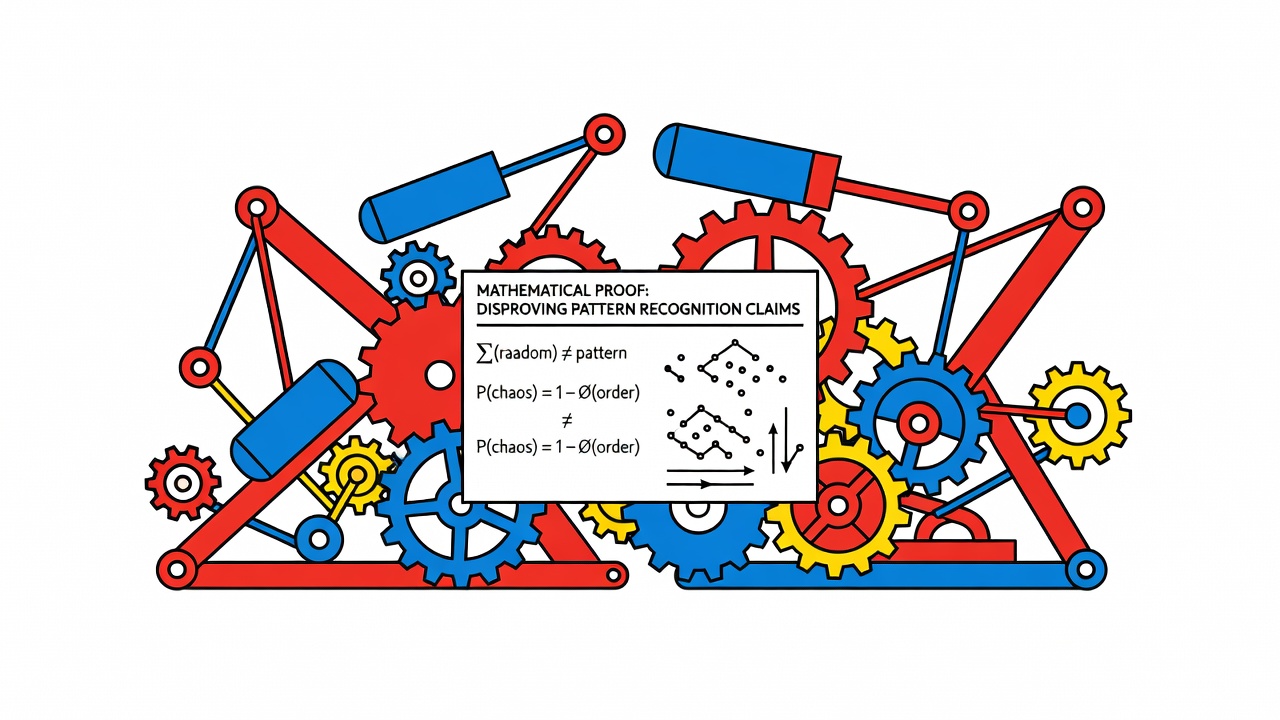
Slot machines use pseudorandom number generators (PRNGs). A PRNG is a mathematical algorithm that produces a sequence of numbers that appear random but are entirely deterministic. The algorithm takes an input (a seed value) and produces an output. Feed it the same seed twice, and it produces the same sequence twice. This determinism is the opposite of true randomness, but players cannot perceive the difference because the sequence repeats only over billions of iterations.
A modern slot PRNG runs at the moment of button press. The player presses the spin button at timestamp 11:47:32.453 AM. The PRNG uses that timestamp (or a more precise internal clock value) as part of its seed. It generates a pseudorandom number between 1 and 1,000,000. The game's RTP (Return to Player) percentage determines the probability distribution. If the game has 94 percent RTP, then roughly 940,000 of those 1,000,000 numbers correspond to winning outcomes. The remaining 60,000 correspond to losses.
The critical point: the PRNG has no memory. The algorithm does not know what happened in the previous spin. The probability of winning on spin 100 is identical to the probability of winning on spin 1. This is how randomness works mathematically.
Players experience this differently. A player sees a sequence of losses and feels the machine is "cold." A sequence of wins feels "hot." This is the gambler's fallacy: the belief that past outcomes influence future probabilities. Mathematically false. Experientially compelling. A player who loses ten times in a row will feel that a win is "due." This feeling has zero basis in the machine's operation.
The mechanical history (why this belief exists)
Older mechanical slot machines (1970s through early 1990s) used physical drums with mechanical stops. A drum could land on any of 20 positions. The probability of matching three lemons was 1/8000 (20 cubed divided by 64 possible combinations per drum). The outcome was determined by the physical position where the drum stopped spinning.
A skilled operator (or cheater) could influence the stopping position by timing the spin precisely or applying subtle mechanical pressure. This meant that mechanical machines genuinely could have "hot" machines (maintained by a friendly operator who tilted probabilities) and "cold" machines (ones the operator neglected). Players' intuition was correct for mechanical machines.
The transition to electronic machines (1990s onward) rendered this completely false. A random number generator cannot be tilted by an operator. It cannot be influenced by prayer or lucky rituals. It simply generates numbers according to its algorithm. Players continued believing in hot and cold machines out of habit. The belief survived the technological change that invalidated it.
Why this matters for game design
Slot designers are aware that players believe in hot and cold machines. They do nothing to correct this belief. Why? Because the belief increases play. A player who believes a machine is hot will play it longer. A player who believes a machine is cold will move to a different machine. The designer benefits either way: belief in hot/cold streaks keeps players moving around the casino, playing machines they might not have tried otherwise.
Modern game design uses this knowledge. Some slots are programmed with variable gameplay features that activate at specific points in the session. After a player has been playing for 20 minutes, the game might subtly increase the frequency of near-miss outcomes (losing spins that are one symbol away from a jackpot). This is not a streak. It is a designed feature. The player feels the machine is "getting hot" when actually the game has simply shifted its bonus-feature probability distribution.
Advanced players know this is false. The PRNG cannot change its behavior based on session duration. But casual players feel the machine shifting. The game feels different. The feeling is real (the game design creates it), but the cause is not what the player thinks.
The practical reality
A casino can program any RTP distribution it wants. Nevada law requires 85 to 98 percent RTP (the casino chooses where in that range). A machine with 85 percent RTP will lose more money over 10,000 spins than a machine with 95 percent RTP. But both machines will show natural variance. Both machines will have win streaks and loss streaks that feel meaningful to the player.
Variance is real. A hot streak is real. What is false is that the streak means anything for future spins. If you played spin 100 and won, this has zero causal relationship to spin 101. But if you played spins 97, 98, and 99 and won all three, you feel like spin 100 is likely. The feeling is an artifact of how human brains process probability.
The belief in hot and cold machines is so persistent that even casinos sometimes talk about machines as if they have temporary personalities. A casino host might say, "Try the machine on the end, it's been loose today." What they mean is: that machine has paid out more than expected in a short period (variance). But they know the player will interpret this as "the machine is hot right now." The host is using the player's false belief to encourage play.
For a player with a bankroll, understanding that hot and cold streaks are illusions is valuable. You can play with the knowledge that your win probability does not depend on whether you just won or just lost. This might help you make better stopping decisions: stop when you hit your win target, regardless of whether the machine feels hot. Stop when you hit your loss limit, regardless of whether it feels cold. The machine's feelings are irrelevant.
Keep reading
Same market
 GuidesUnderstanding Slot Variance: A Player's Guide
 SlotsBet Size Matters More Than Spin Count
 SlotsTop Egyptian-Themed Slots and Why the Theme Never Dies
 SlotsIrish-Themed Slots: Why Leprechauns Keep Coming Back
 BonusesWhat Free Spins Actually Are
 Crypto GamblingCommon Red Flags of Shady Crypto Gambling Sites