
How to Choose a Trustworthy Online Sportsbook
Trust and sportsbook selection is not about reputation. It is about measurable safeguards and transparent mechanics.
When someone asks how to choose an online sportsbook, they usually mean which brand to use. That is the wrong question. The right question is what structural safeguards to demand before you deposit any money.
First, licensing jurisdiction. A legitimate sportsbook is licensed by a recognized regulator. The UKGC (United Kingdom Gambling Commission). The MGA (Malta Gaming Authority). The Curaçao eGaming licensing authority. These are not perfect regulators, but they have actual enforcement mechanisms. If the sportsbook is licensed by none of these, or if they claim to be licensed by a jurisdiction you cannot verify, consider that a red flag.
Verify the license by checking the regulator's published list. The UKGC maintains a public register. The MGA has a searchable database. If the operator claims licensure but does not appear in the official register, they are either lying or operating under a shell company. Either way, it is a risk.
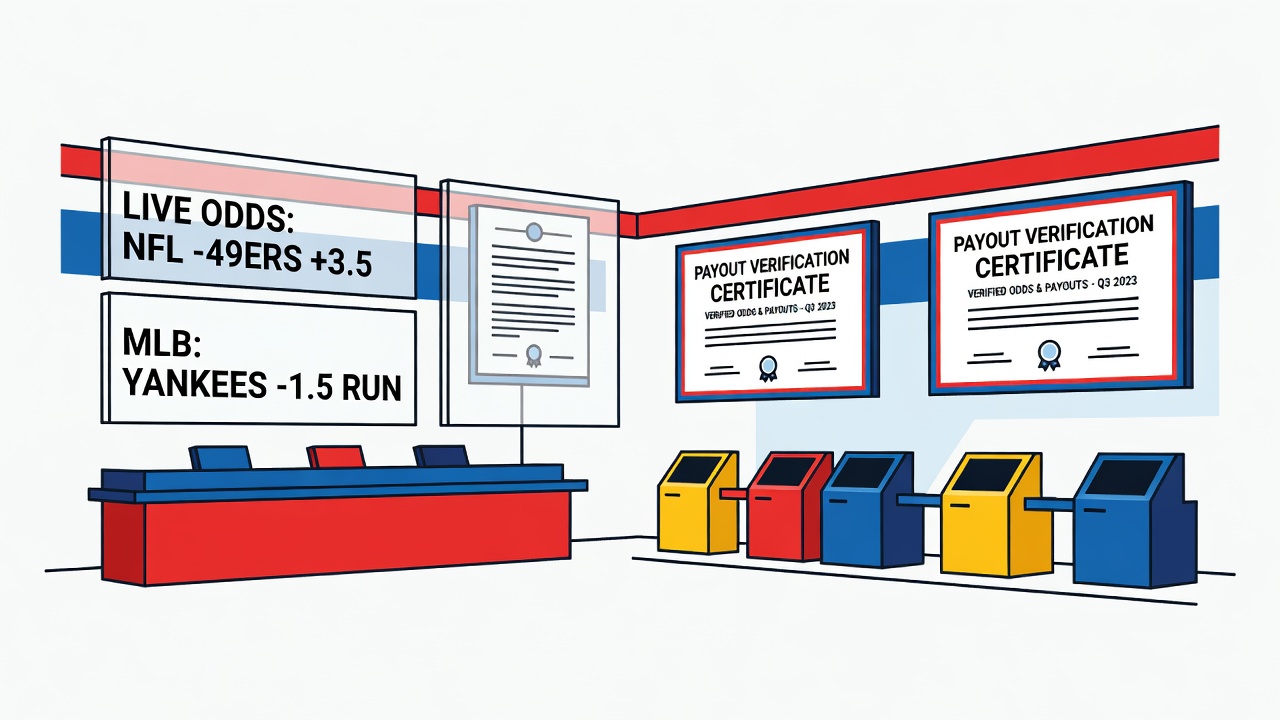
Second, independent auditing. Legitimate sportsbooks have their odds-setting algorithms and payout mechanisms audited by independent third parties. Companies like GLI (Gaming Labs International) or eCOGRA conduct these audits. If an operator claims fairness but has not been audited, that claim is worth nothing.
Check whether the audit is current. Annual audits are standard. If the operator's most recent audit is three years old, that is a gap. Audits can be expensive, and operators sometimes let them lapse during financial difficulty. Lapsed audits suggest risk.
Third, transparent terms of service. This is the document nobody reads. Read it. Specifically, look for: what is their complaints procedure? How do they handle disputed bets? What are the withdrawal restrictions? A trustworthy sportsbook has a clear complaints escalation path that does not terminate in the house. If every disputed bet is "resolved" in the sportsbook's favor with no appeal, the terms are extractive.
Operational Safeguards
Fourth, segregated customer funds. In most legitimate jurisdictions, a sportsbook must hold customer money in accounts separate from operational accounts. This means if the sportsbook has financial trouble, customer balances are theoretically protected. An operator that commingles funds is taking riskier practices.
Fifth, responsible gambling tools that actually work. A trustworthy sportsbook allows you to set deposit limits, loss limits, and self-exclusion periods. Moreover, those limits cannot be unilaterally adjusted upward by you during a session. If you set a $100 loss limit and can freely click a button to raise it to $500, the limit is performative, not protective.
Sixth, human customer support with real escalation. Many operators run customer service bots that answer form-letter responses. A trustworthy sportsbook has humans available during reasonable hours. If you email with a dispute and receive only automated responses, that is a signal.
Seventh, payment processing that you can verify. If a sportsbook offers 50 deposit methods but all payments go through a single intermediary processor, there is concentration risk. Diversified payment processing suggests the operator is confident they will not have to freeze operations.
Eighth, pricing transparency. A trustworthy sportsbook publishes their vig (the commission they take on each bet). Standard vigorish in the industry is roughly 4.5 percent on both sides of a bet. If a sportsbook advertises "low lines" but never specifies their actual edge, that is suspicious.
Trust in sportsbooks is not a feeling. It is a set of verifiable structures.
Ninth, account security features. Two-factor authentication should be available. Geolocation restrictions should be clear. If you are in a jurisdiction where the operator is not licensed, they should block you or warn you. If they accept your deposit anyway, they are taking legal risk you should not enable.
Tenth, track record of non-collapse. A one-year-old sportsbook has not been tested. A ten-year-old sportsbook has. Longevity is evidence of operational competence, though not guarantee. Many sketchy operators lasted several years before imploding.
None of these checks are foolproof. But together they create a profile of risk. An operator that scores high on seven or eight of these measures is lower risk than one that scores high on two. This is not about brand loyalty or marketing. It is about structural evidence that the operator is unlikely to either steal your money or collapse with it.
Markets in this line
Keep reading
Same market
 Sports BettingPlayer Prop Line Movement: News Clocks and Injury Tags
 GuidesNo Vig Fair Odds Calculator: Three Methods, Worked Through
 GuidesUnderstanding Slot Variance: A Player's Guide
 GuidesWhat to Do When Your Casino Withdrawal Fails: A Long Look at a Small Problem
 GuidesMMA Style Matchups: What The Numbers Miss
 Sports BettingSame-Game Parlays: Fun, But Are They Profitable