
Benny Binion: The Outlaw Casino Operator Who Changed Las Vegas
Binion operated a casino like a ship's captain operated a ship: with absolute authority and personal accountability. He ran Horseshoe until his way made no sense anymore.

Benny Binion arrived in Las Vegas from Dallas in 1951. He had been a successful bookmaker in Texas, which meant he had been a criminal for thirty years. Bookmaking was illegal. He paid off the cops and the politicians and conducted business. When the heat became untenable, he relocated. Las Vegas was the only place in America where organised gambling was legal. He saw an opportunity that legitimate businessmen could not see because legitimate businessmen did not think like he did.
Binion purchased a small casino on Fremont Street called the Eldorado Club. He renamed it Binion's Horseshoe. He operated it with a bootlegger's logic: the house profits by being fair. If players are cheated, they leave. If players are treated well, they return. He installed a rule that would become his signature: the highest table limits in the world. No bet was refused. A player could wager any amount on any hand. This was revolutionary. Every other casino capped bets to protect their bankroll. Binion said the casino should absorb whatever risk the customer wanted to take.
This attracted a specific clientele. Serious players, professional gamblers, men and women who wanted to play poker at limits that challenged their bankroll. Binion's Horseshoe became the centre of high-limit poker in America. It still is. The casino became famous not for opulence (it was shabby, by modern standards, and remains shabby intentionally) but for authenticity and fairness.
Binion understood that he was not selling luxury. He was selling action. A man who wanted to risk 500,000 dollars on a single poker hand did not care about thread count or caviar. He cared about liquidity and trust. Binion provided both. The house always had enough money to cover any bet. The money never disappeared. Players won, players cashed out, no complications. This is what separated Binion's Horseshoe from every other casino in America.
The Poker Tournament Innovation
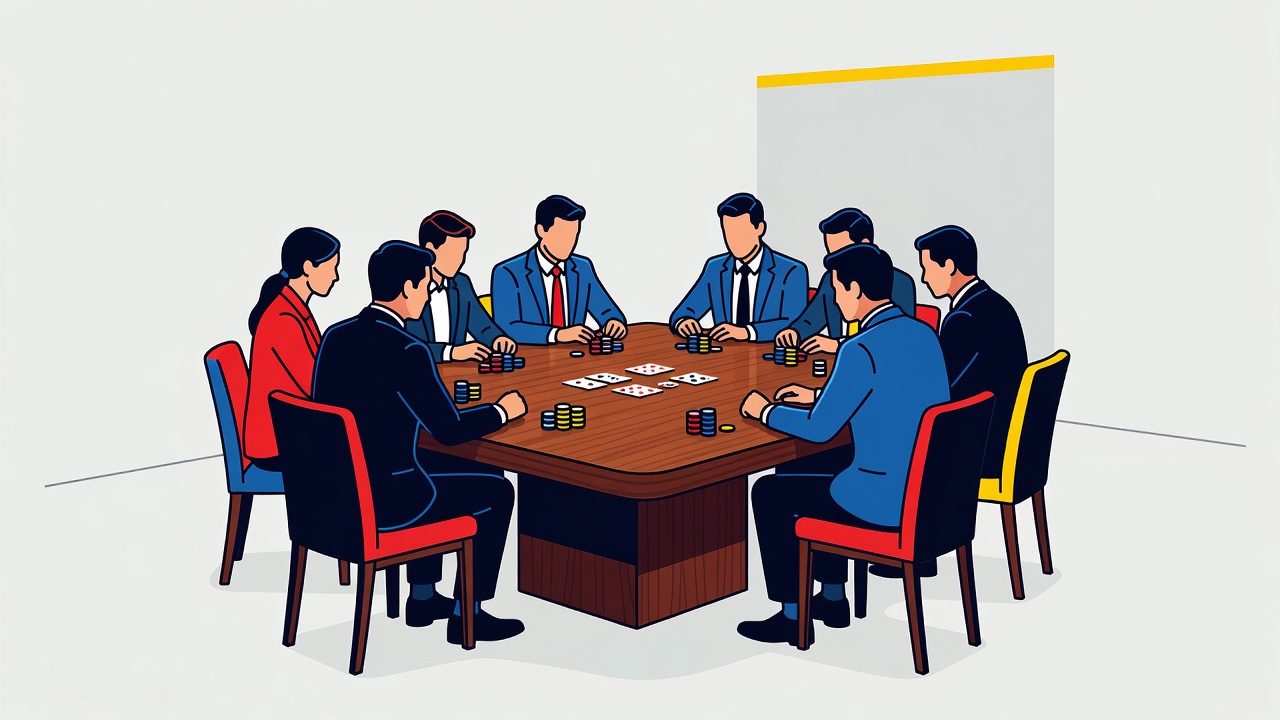
In 1970, Binion invited the best poker players in America to his casino for a high-stakes poker tournament. He called it the World Series of Poker. There were seven tables. About fifty players total (the actual number is disputed; records were informal). The best players in the country played heads-up poker against each other. The winner was Johnny Moss, a professional gambler who had been playing high-stakes poker for forty years. He was paid his prize in cash, walked out of the casino, and disappeared into the Vegas night with roughly 39,000 dollars in a paper bag.
This was not business as usual. This was Binion creating an entire sport. He knew it would attract more players. He knew it would increase his casino's prestige. He was correct on both counts. The World Series grew from one tournament in 1970 to a series of multiple tournaments by the 1980s. It is now the most prestigious poker tournament series in the world. Binion's Horseshoe hosts it annually. The casino's entire brand is built on this single innovation.
Why did Binion create the tournament? The conventional explanation is entrepreneurship. The true explanation is that Binion understood players. They did not want to gamble alone. They wanted to test themselves against others. They wanted prestige. A tournament provided all three. The casino would take a rake (a small percentage of each pot) and make money off the action. The players would compete against each other, feeling like they were in an important event.
The Decline
Binion ran the Horseshoe until 1989, when he retired and handed the operation to his son Jack. By this time, Binion was eighty-five years old and his methods were becoming outdated. Massive new casinos (the Mirage, opened in 1989, the Bellagio, opened in 1998) were built by corporations with professional management. They had marketing budgets, theme-park architecture, elaborate shows. Binion's Horseshoe remained shabby, famous, and profitable, but it was no longer the centre of gravity.
In 1998, Jack Binion sold the casino. Benny Binion had died in 1989. The transition happened without him. The casino changed owners multiple times. It went bankrupt. It was resold. It remains iconic in poker circles but is no longer the flagship casino it once was.
Binion's actual legacy is the principle, not the property. He proved that a casino could be profitable through fairness and action rather than opulence and house advantage maximisation. The casinos that succeeded after him (particularly in poker and high-stakes games) adopted his model. They compete on having the best players, the best action, and the most trustworthy operations. They do not compete on being the most beautiful.
A man who operated a casino like a ship's captain operates a ship, with absolute accountability and personal reputation, could not exist in the modern era. Corporations do not work that way. But Binion showed what was possible when they did. His casino exists still, diminished but intact, as a monument to that era.
Markets in this line
Keep reading
Same market
 Big WinsTerrance Watanabe's $127 Million Loss at Caesars Palace
 PokerMolly's Game: The Real Story Behind the Hollywood Poker Nights
 CelebritiesPamela Anderson's Poker Losses and Baywatch Paychecks
 Crypto GamblingDecentralized Poker: The Mechanism Problem
 BaccaratKerry Packer's Legendary Baccarat Loss to Private Banker
 BlackjackHow Movies Get Blackjack Wrong: A Reality Check