
How to Spot Bots and Collusion in Online Poker Games
Bots are silent. They don't chat, don't tilt, don't take breaks. Collusion is two humans coordinating to isolate a third. Here's what to watch for.
In 2014, a player at PokerStars noticed something odd. A specific table, specific time of day, three players kept appearing together. They never played hands together (which would be obvious). But they isolated him. They took turns raising when he was in position. They folded when each other needed them to fold.
Over a week, he lost 15,000 dollars. Not to bad luck. To coordination.
That's collusion. Two players working against a third (or more). It's the oldest fraud in poker.
The Mechanics of Collusion
Two colluders need communication. Historically this was easy: hand signals, code words, texts between hands. Online, it's still possible. They don't even need to be obvious. If Player A raises with a wide range and Player B folds, then Player A check-folds on the flop, information is exchanged. "I'm weak here," Player A signals. Player B responds by folding their weak hands.
The victim doesn't see the signals. They just see losing hands against what looks like competent play.
The Bot Problem
Bots are different. A bot is software playing poker. It doesn't get tired, doesn't tilt, doesn't have tells.
In 2015, a poker AI called Claudico played professional poker players in a Las Vegas match. It didn't beat them, but it was close. That was a lab experiment.
Illegal bots operating on poker sites are less sophisticated but still dangerous. They play a tight, unexploitable strategy. They don't make mistakes. They win slowly and consistently.
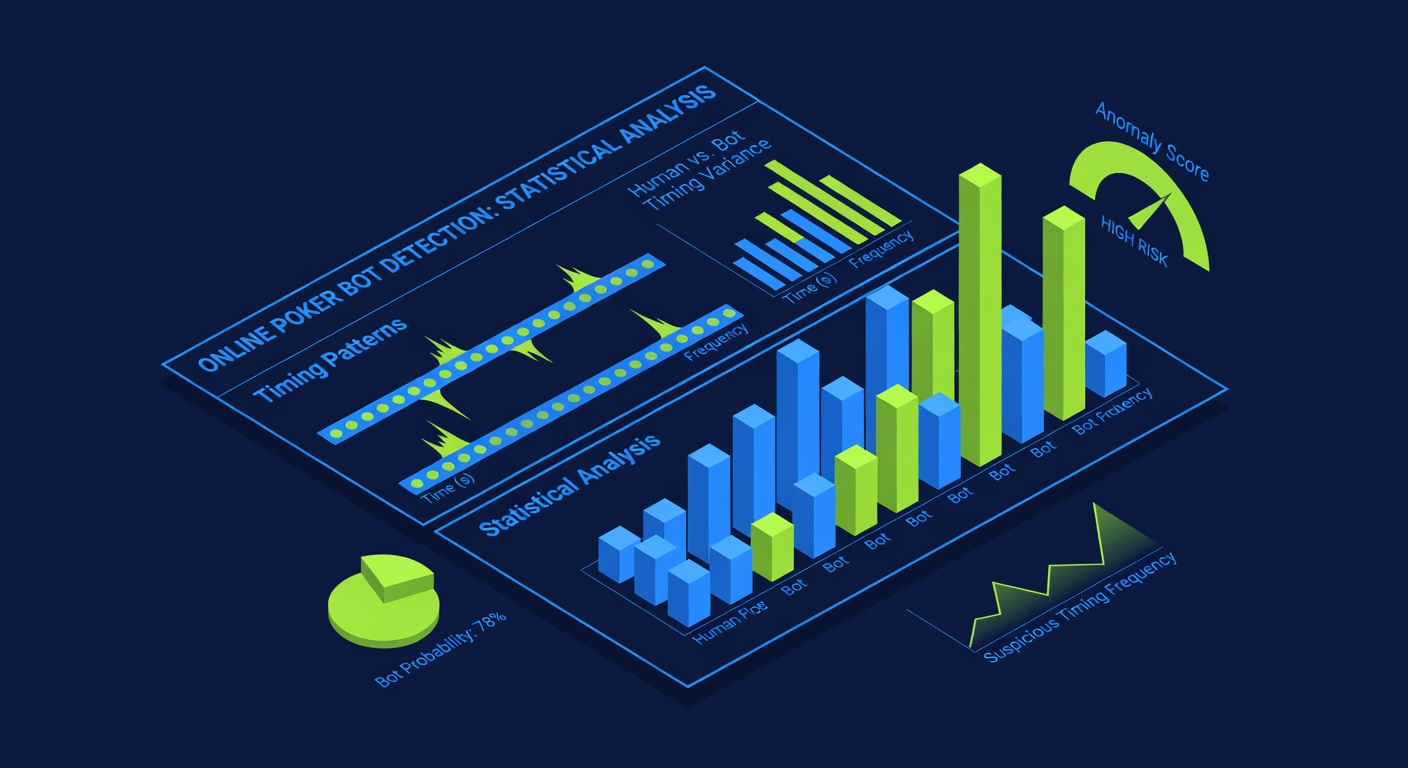
Bots are detectable by pattern. They play the same hands in the same way repeatedly. They never deviate. They never tilt-call with garbage. They never bluff with a gutter shot.
How To Spot Bots
-
Play history. Download your hand history. Look for patterns. Does this player always 3-bet from the button? Do they always check the flop when they miss? Humans vary more.
-
Playing times. Is the player online at 3 am for eight hours straight? Humans sleep. Bots don't.
-
Game selection. Does the player sit at bad games or good games? Humans choose softer games. Bots play wherever they're programmed.
-
Bankroll management. Bots are limited by their algorithm. They won't risk too much. Humans sometimes overbet their bankroll.
-
Chat. Humans chat (sometimes). Bots never do.
How To Spot Collusion
-
Positional weakness. Two players who always 3-bet together, always fold together, always play weak positions the same way.
-
Isolation patterns. One player consistently targets a third player for aggression while avoiding aggression against their partner.
-
Pot equity distribution. Over a long sample, one player wins pots with the colluder, and the colluder wins pots without them. But their combined win rate is suspiciously high.
-
Hand revelation. When two players go to showdown together, their hands are often disconnected (not collusive hands). But their hand selections against a victim are coordinated.
-
The victim's variance. If you're running well (winning) and suddenly hit a downswing against two specific players, that's a yellow flag.
The Platform Response
Licensed casinos (MGA, UKGC) take this seriously. PokerStars has security teams analyzing for collusion patterns. DraftKings has similar.
When they catch it, they ban accounts and sometimes sue. Full Tilt Poker (pre-scandal) would just ban and move on. PokerStars (post-scandal) is stricter.
But detection is hard. Collusion between skilled players can look like normal poker for a long time.
What You Should Do
If you suspect collusion:
- Stop playing. Leave the table.
- Report to the site (use the complaint feature).
- Download your hand history and review it.
- If the pattern is clear, escalate (contact support, provide data).
If you suspect bots:
- Same process. Report and provide hand history.
- Provide timestamps of suspicious play.
- Note the pattern (time of day, consistency, lack of variation).
Most sites will investigate. Bots are technically detectable (the software leaves traces). Collusion is harder to prove definitively, but patterns are suggestive.
The Real Danger
Unlicensed poker sites (Curaçao-licensed, basically unregulated) don't have security teams. They just take your money and move on.
If you're playing online poker, play only at MGA or UKGC licensed sites. Stake, GGPoker, Unibet. Sites with actual enforcement.
The risk of collusion or bots at unregulated sites approaches 100% over a large sample.
Markets in this line
Keep reading
Same market
 Sports BettingPlayer Prop Line Movement: News Clocks and Injury Tags
 GuidesNo Vig Fair Odds Calculator: Three Methods, Worked Through
 GuidesUnderstanding Slot Variance: A Player's Guide
 PokerMolly's Game: The Real Story Behind the Hollywood Poker Nights
 CelebritiesPamela Anderson's Poker Losses and Baywatch Paychecks
 GuidesWhat to Do When Your Casino Withdrawal Fails: A Long Look at a Small Problem