
Caribbean Stud Poker: Complete Strategy Guide
Caribbean Stud is poker against the dealer. Strategy is simple: fold weak hands, play strong hands. The house takes a 5 percent edge.
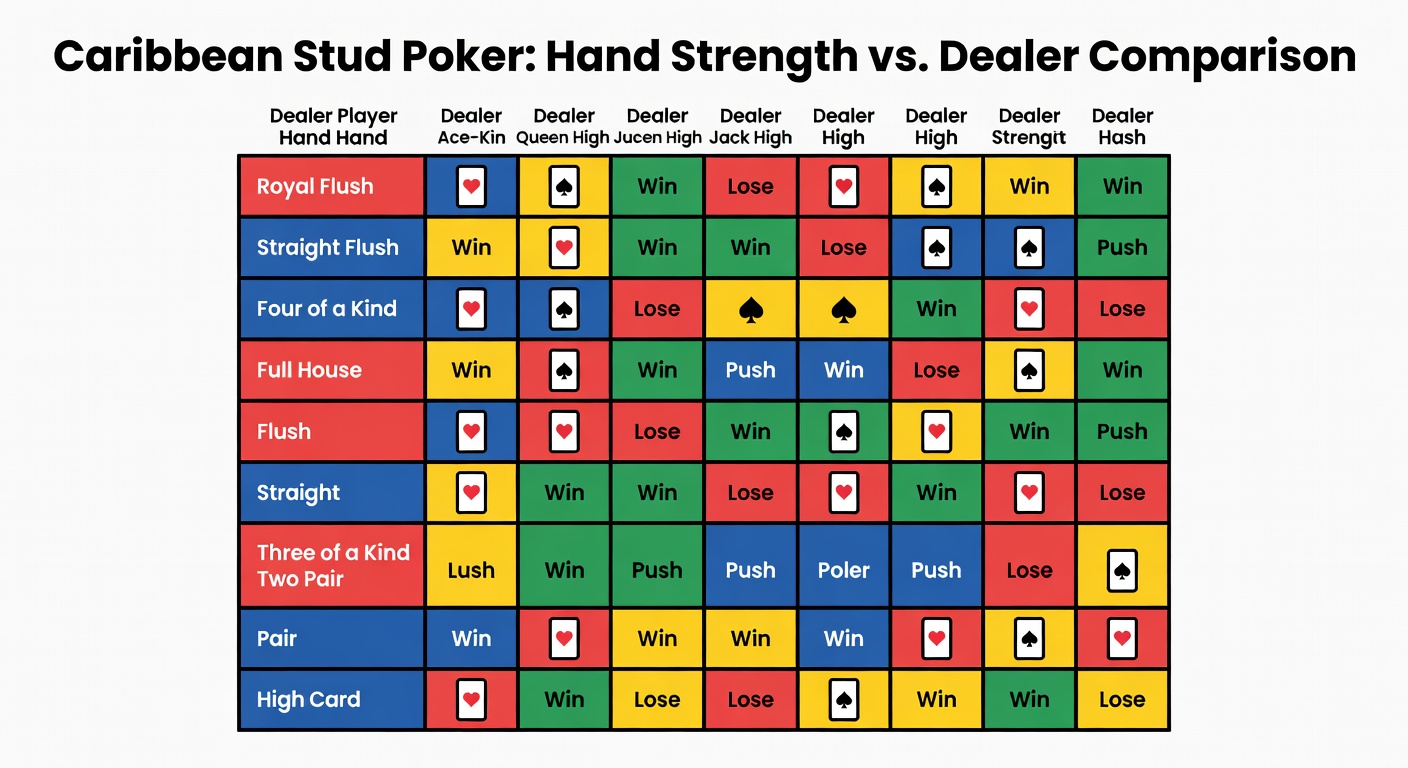
Caribbean Stud is five-card poker played against a dealer, not against other players. You make an ante bet. You receive five cards. The dealer reveals four cards face-up. You decide to fold or raise. This simple structure generates consistent house revenue.
Fold, you lose your ante and hand ends. Raise, you place an additional bet equal to your ante. The dealer reveals their fifth card. The best five-card poker hand wins both the ante and raise bet (or both push if hands tie).
The house edge at correct strategy is 5.22 percent. This is worse than blackjack (0.5 percent) but better than many table games (7-15 percent range).
The Correct Strategy
Strategy is dictated by one rule: fold unless you have at least Ace-King paired with a lower kicker, or any pair or better, or any high card hand of Ace-Queen or better.
More precisely:
Fold if you have: King high or worse without an Ace, Queen high without an Ace or King, or Ace-Jack and dealer showing an Ace.
Play (raise) if you have: Any pair, Flush, Straight, Any Ace combination, Any King-Queen hand, King-Jack, or Queen-Jack.
Following this strategy minimizes expected losses. Your expected loss per hand is approximately 5.22 cents per dollar wagered long-term.
The Ante Bonus Structure
Caribbean Stud includes an optional side bet called the "Ante Bonus." If your initial five-card hand hits specific thresholds (flush or better), you win extra money regardless of whether you beat the dealer.
Typical ante bonus payouts:
- Flush: 5:1 payout
- Straight: 4:1 payout
- Three of a Kind: 3:1 payout
- Straight Flush: 50:1 payout
- Royal Flush: 100:1 payout
The ante bonus has a house edge of 2.54 percent. This is actually better than the main game's 5.22 percent edge.
Some experienced players make only the ante bonus bet and skip the main game entirely. This is mathematically reasonable (lower house edge), though unconventional and unusual at the table.
Why The House Edge Is High
Caribbean Stud requires you to beat the dealer's actual poker hand. This removes pure luck and introduces skill. However, the ante structure gives the house an enormous advantage.
If you fold, you lose your bet immediately without contest. If you raise and lose, you lose double (both the ante and your raise). This asymmetry is the source of the house edge.
The game feels like you have control (you decide to fold or raise based on hand strength). This illusion of control is important for the game's appeal. In reality, the house edge is largely fixed by the game structure, not by your decisions.
Practical Strategy Execution
Follow the strategy chart exactly. Do not deviate based on intuition or gut feeling. Your intuition about poker is likely wrong. The mathematics have been tested across millions of hands.
Set a loss limit before playing and adhere to it. If you are losing faster than expected or your bankroll is depleting, leave the table immediately.
Understand that Caribbean Stud is not a game where you should expect to profit. It is a game where you should expect to lose approximately 5 percent of your action long-term. Manage your expectations accordingly.
Why This Game Exists
Caribbean Stud exists because it appears to offer skill (you make decisions) while actually offering primarily luck. Players believe they can beat the game through strategy. The house edge is high enough that strategy cannot overcome it.
The game generates significant revenue for casinos because it appeals to players who enjoy poker but want a simpler, faster experience against a dealer rather than other players.
Keep reading
Same market
 Sports BettingPlayer Prop Line Movement: News Clocks and Injury Tags
 GuidesNo Vig Fair Odds Calculator: Three Methods, Worked Through
 HistoryClosing Line Value Calculator: The Math Behind CLV
 GuidesUnderstanding Slot Variance: A Player's Guide
 SlotsBet Size Matters More Than Spin Count
 Live CasinoDeal or No Deal Live: Rules and Expected Value