
Craps Etiquette: Rules You Didn't Know Existed
Craps table etiquette is an unwritten code that casual players violate constantly. The rules protect the game and the players, but nobody explains them.

The term "etiquette" in the context of craps is marketing language for operational protocol. Here is what the casino marketing materials do not say plainly: craps has rules that are not written in the formal gaming rules. These are social rules enforced by dealers, boxmen, and other players. Violate them and the consequences range from subtle (the stickman will slow down the game) to absolute (the boxman will eject you).
The Touch Rule. Translation: do not touch the dice with two hands or with both hands simultaneously. You may touch the dice with one hand. You may throw them with one hand. The moment you use two hands, the dealers will stop the game, remove the dice, and examine them for switching. This rule prevents cheating. A player using two hands could theoretically swap the legal dice for loaded dice. Casinos will not accept even the tiny statistical chance of this. The rule is absolute.
The Wall Rule. Translation: every throw must hit the back wall. If you throw the dice and they do not reach the back wall of the table, the throw is a "no-roll." The stickman will call it immediately. You throw again. This rule prevents short-distance throwing. If players could throw the dice just three feet, they could control the outcome with practice. Professional cheaters have used short-controlled throws in games without this rule.
The Hands Rule. Translation: keep your hands off the table after you have thrown the dice. Once the dice leave your hand, your hands must be off the table. The reasoning: if your hands are on the table when the dice land, you could potentially influence them (flicking one as it lands). This sounds paranoid. Casinos deal with paranoia professionally. The rule is enforced absolutely at high-limit craps. At penny-stakes craps in a low-end casino, enforcement is looser.
The Betting Rules (Marketing's Silent Truths)
The Four-Count Rule. Translation: you cannot change your bet after the come-out roll. Specifically, once the shooter has committed to throwing (hand is moving) you cannot add or remove bets. Most casual players do not know this. The marketing language is "the game has started, no changes." What this actually means: the casino prevents last-moment betting changes that could undermine fair probability distribution. If you could add money after seeing how the shooter positions the dice, you could gain an edge. The rule prevents that.
The Odds Placement Rule. Translation: when you take odds or lay odds, place the chips on the table. Do not hand them to the dealer. The casino's reasoning: if you hand chips to the dealer, you could claim later that you never authorized the bet. By placing the chips in the specific odds-placement zone, you create documentary proof of intent. This is pure liability protection disguised as "proper procedure."
The Proposition Bets Rule. Translation: proposition bets in the middle of the table are working on the come-out roll unless you explicitly call them "off." Most casinos will not tell you this. The rule exists because it generates more action. Your proposition bet stays in action during the come-out when you might reasonably think it should pause. This is money deliberately transferred from player to house through asymmetric knowledge.
The Unspoken Social Rules
The Celebration Rule. Translation: do not celebrate loudly on winning throws. Specifically, do not taunt other players who are losing. Casinos enforce this through subtle dealer pressure. A player who makes a large winning bet and celebrates aggressively will notice the stickman "accidentally" slowing down the game. Long pauses before calling bets. Suddenly the game feels slightly less fun. The player leaves. This is the casino's enforcement mechanism for table decorum without explicit rule-breaking.
The Color-Up Rule. Translation: you must maintain your original chip denomination. If you bought 100 dollars in red chips (5-dollar chips) you should not suddenly request a color-up (exchange) to black chips (100-dollar chips) unless you are leaving the table. The reasoning is superstition, but the rule is real. Other players view color-ups as bad luck. Dealers will accommodate your request, but the table's mood will shift. Casual players feel this implicitly.
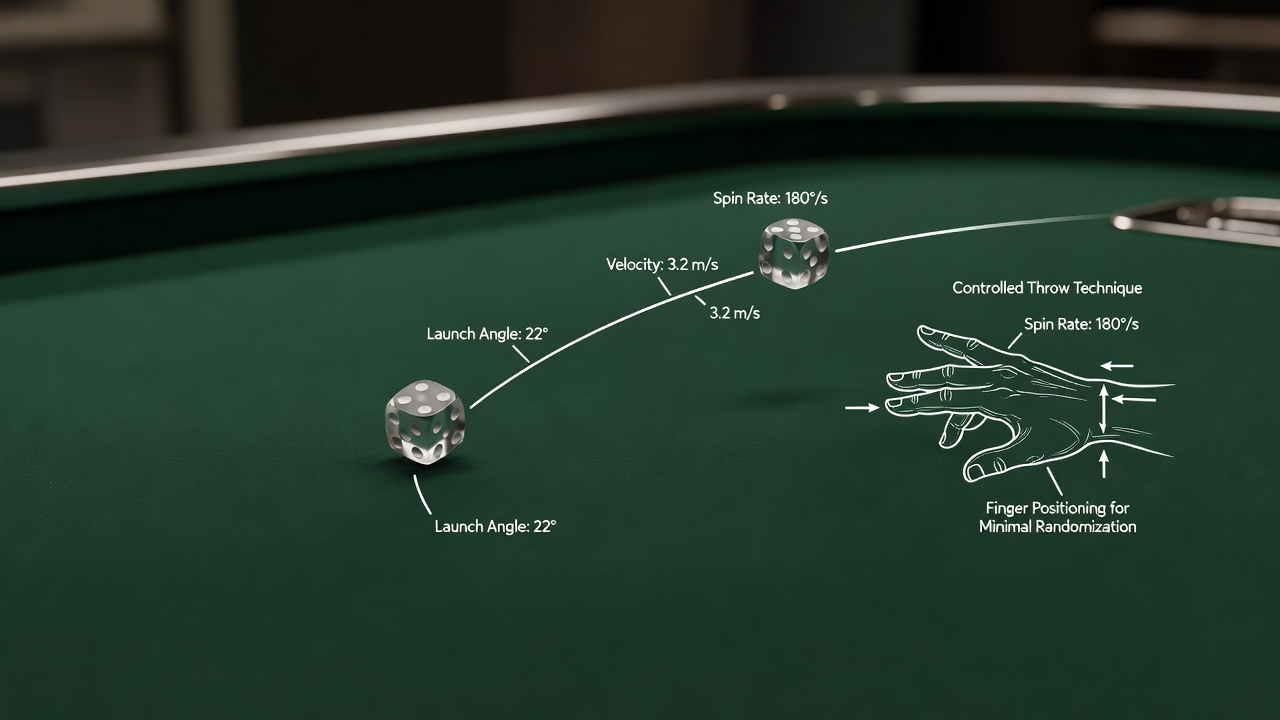
The Throwing Style Rule. Translation: there is a range of acceptable throwing styles. You can use an overhand throw or underhand. You can rotate the dice in the air or throw them straight. What you cannot do: throw them so hard they bounce off the table. Throw them with such spin that they go completely unpredictable. Use a throwing style that the dealers cannot easily predict. The dealers want the dice to be somewhat controllable. They watch for a consistent throwing motion because consistency proves you are not cheating. Erratic throws draw suspicion.
Why Nobody Explains This
The casinos intentionally keep these rules informal. If they published an official rulebook saying "do not use two hands because we suspect switching," it would immediately suggest that switching is possible. It would make players paranoid. Instead, casinos enforce the rules through informal dealer pressure and unwritten tradition.
New players discover these rules through embarrassment or ejection. A tourist learns the two-hands rule when the stickman stops the game and lectures them quietly. Humiliated, they follow the rule thereafter. This peer-to-peer enforcement is cheaper than formal education.
The marketing department wants you to think craps is a simple, welcoming game. The operational reality is that craps is a heavily regulated game designed to prevent cheating through layers of seemingly arbitrary etiquette. The etiquette is not arbitrary. Every rule prevents a specific form of cheating or advantage-gaining that casinos have encountered historically.
Markets in this line
Keep reading
Same market
 Big WinsJerry Patterson's Craps Roll: Fact or Casino Legend?
 CrapsHow Bitcoin Gambling Grew from SatoshiDice to Modern Crypto Casinos
 Sports BettingPlayer Prop Line Movement: News Clocks and Injury Tags
 Big WinsImplied Probability Formula for Every Odds Format
 GuidesNo Vig Fair Odds Calculator: Three Methods, Worked Through
 HistoryClosing Line Value Calculator: The Math Behind CLV