
Public Betting Percentages: How to Actually Use Them
Fifty-five percent of dollars are backing one side. This number reveals market thinking, not truth. Learning to decode it is fundamental.
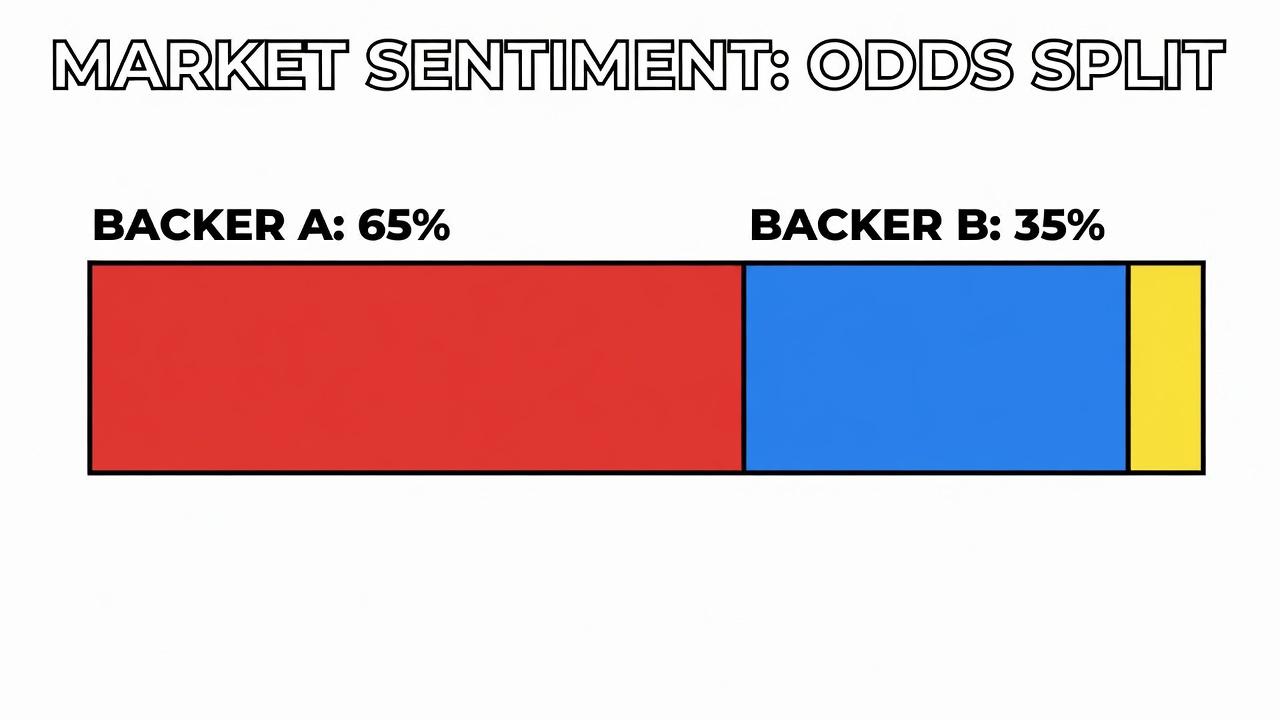
You log into your sportsbook and see that Team X is attracting 55% of handle (volume of money wagered) across all bettors. Team Y receives 45%. What does this tell you? The immediate reading is wrong: it does not mean Team X is 55% likely to win.
Consider instead what created this distribution. Bookmakers began the week with a line they thought was fair. Money flowed in. More came to Team X than Team Y. As this happened, the bookmakers adjusted the price. They raised the Team X odds (made it less favorable) and lowered Team Y odds (made it more favorable). This price movement is meant to attract money to the unpopular side and away from the popular side.
What you see (55% on Team X) is the outcome after these adjustments. It is not naive betting; it is betting that survived price movement. Some bettors looked at the worse odds on Team X and still bet it anyway. This is information. It suggests either that sophisticated money knows something or that unsophisticated bettors are following an attractive narrative.
The sportsbook is indifferent to which side wins; they profit from the margin (the vig) collected on both sides. Their goal is balance. If they achieve a 52% to 48% split instead of 50% to 50%, they keep roughly the same margin. The handle percentage is not their primary concern. What matters is that they have mitigated their risk.
How Information Flows
Sharp money typically arrives early and moves the line. The market sees sharp activity and adjusts. By the time casual volume arrives later in the week, the line has already partially incorporated smart money's view. The percentages that emerge reflect this layering of information.
In college football, sharp money often indicates something specific: injury reports, weather changes, coaching adjustments. When professional bettors accumulate on one side, the public betting percentage can actually move away from that side as the line adjusts. You might see sharps piling onto Team Y, the line moves dramatically toward Y, but the percentage remains 60% on Team X because casual bettors have not arrived yet.
The distribution shifts throughout the week. Monday morning the split might be 58% Team X, 42% Team Y. By Thursday it might be 52% Team X, 48% Team Y, even though the line has moved substantially. The movement toward balance indicates continuous price adjustment.
For the bettor, the percentages serve one purpose: they confirm whether the sportsbook shares your assessment. If your model says Team Y is undervalued but the handle is only 40% on Team Y, the market disagrees with you. This disagreement does not mean you are wrong, but it suggests the sportsbook has information or a different valuation. At minimum, you need to reconcile the difference.
The percentage is data about aggregate human behavior, not a proxy for probability.
Movement in the percentage matters more than the absolute figure. If Team X opened at 60% and has dropped to 55%, money is shifting. This signals either a changing opinion or price correction working. The direction tells you which. If the line moved in Team X's favor and the percentage still dropped, then money is genuinely rotating away. If the line moved against Team X and the percentage still dropped, then the rotation is more dramatic than the line adjustment.
Regional sportsbooks publish different percentages because their customer bases differ. A Las Vegas book with professional bettors might show 50-50 splits on the same game where a Midwestern book shows 65-35 splits. The discrepancy reveals who is betting where.
Forecasting the final percentage is difficult because money arrives unpredictably. But the trend from Tuesday to Friday is usually reliable; movements tend to continue as new information arrives.
Markets in this line
Keep reading
Same market
 Sports BettingPlayer Prop Line Movement: News Clocks and Injury Tags
 GuidesNo Vig Fair Odds Calculator: Three Methods, Worked Through
 HistoryClosing Line Value Calculator: The Math Behind CLV
 GuidesUnderstanding Slot Variance: A Player's Guide
 SlotsBet Size Matters More Than Spin Count
 Live CasinoDeal or No Deal Live: Rules and Expected Value