
Time-Out Features at Online Casinos: A Short-Term Responsible Gambling Tool
Time-out features let you pause your gambling account for hours or days. They are a responsible gambling tool, but they require deliberate activation.
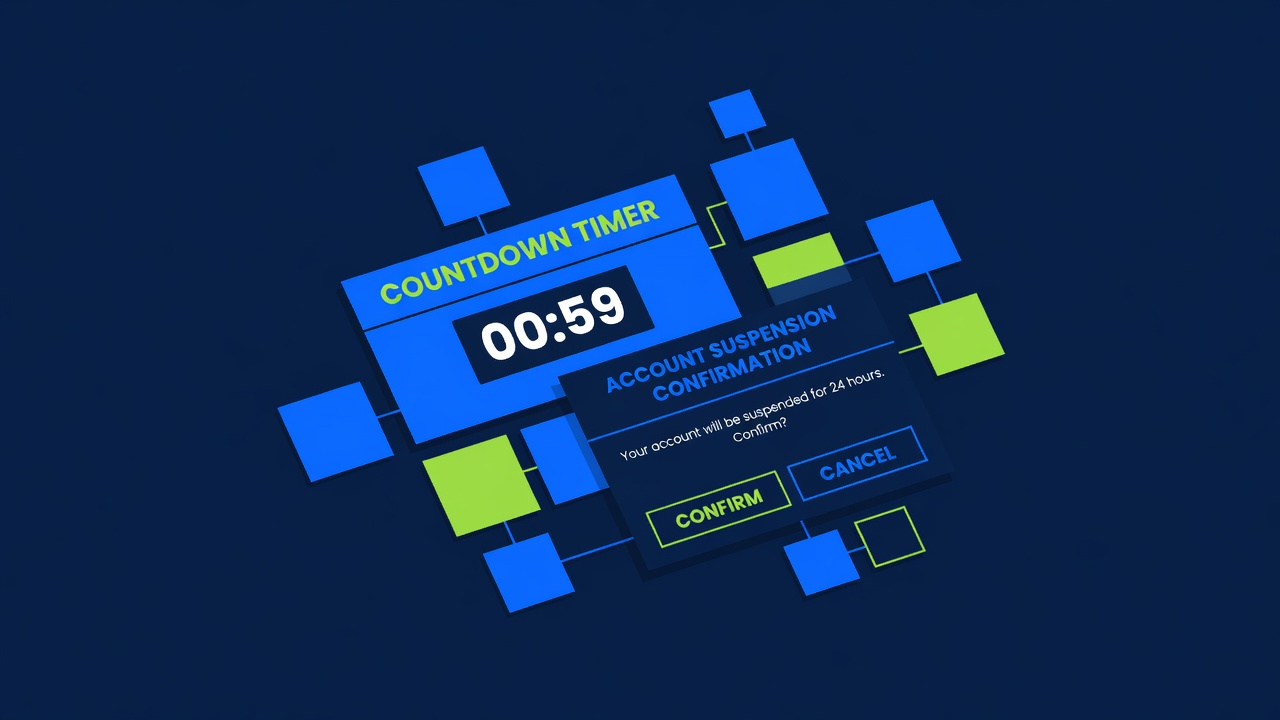
A time-out is a voluntary pause on your gambling account. You click a button. Your account is frozen. You cannot place bets for 6 hours, 24 hours, or 7 days (depending on the operator). The time-out expires automatically. Your account reactivates.
Time-out is different from self-exclusion. Self-exclusion is permanent or very long-term (typically 6 months or longer). Time-out is short-term and reversible. You can set multiple time-outs. Each one pauses your account independently.
The feature is designed for moments of impulse. You are losing money faster than expected. You feel yourself chasing losses. You set a 24-hour time-out. The account locks. You cannot gamble. After 24 hours, you can resume or set another time-out. This breaks the chasing cycle.
How effective is it
Research on time-out effectiveness is mixed. Studies show that players who use time-out have shorter losing streaks than players who do not. The feature does reduce total losses if used immediately after recognizing a chasing pattern.
The problem: most players do not use it. Time-out requires deliberate action. It requires recognizing that you are in trouble and choosing to activate it. An impulsive player in the middle of chasing losses is often not in a mental state to make good decisions. They tell themselves, "Just one more bet." They do not set a time-out.
The effectiveness increases if the time-out is low-friction. FanDuel allows you to set a time-out with a single click from the account menu. Other operators bury the feature in compliance pages, requiring multiple clicks and confirmations. Low-friction time-outs get used more. High-friction time-outs get used less.
The regulatory requirement
Most licensed operators (UKGC, NJ regulators, state commissions) mandate time-out features. The feature is now standard across regulated markets. Operators are required to offer multiple time-out durations (at minimum 6 hours and 24 hours). Some operators offer 7-day and 30-day options.
Unregulated operators sometimes lack time-out features. This is one way to identify unlicensed operators. A legitimate operator offers time-out. An illegitimate one does not (or claims they do but makes it hard to use).
When it actually works
Time-out is most effective when used deliberately before you play, not after you are losing. A player who sets a 7-day time-out before each gambling session (as a ritual, like brushing teeth) reduces their total exposure. They are forced to take breaks between sessions. This breaks momentum and chasing psychology.
Time-out is also effective if you combine it with loss limits. Set a daily loss limit (you will not lose more than 100 dollars today). If you hit that limit, immediately set a 24-hour time-out. This prevents chasing the loss tomorrow. The combination of limits plus time-out is more powerful than time-out alone.
What it does not do
Time-out does not reduce the house edge. Your expected loss is the same whether you time-out or not. Time-out just distributes your losses over longer time periods. It slows down the rate at which you lose money.
Time-out also does not prevent losses if you simply set another time-out when the first one expires. A player in trouble can set a 6-hour time-out, wait 6 hours, and then gamble again. The feature cannot force someone to stop. It can only make stopping easier.
The best use
Time-out is best used as a circuit-breaker. You are gambling. You lose 100 dollars. You set a 24-hour time-out. You do not gamble for 24 hours. You cool off. You realize you were chasing. You decide not to gamble that day. Time-out prevented damage by creating forced space between impulse and action.
For this to work, you must recognize your own warning signs. Am I chasing losses? Am I gambling more than planned? Am I ignoring my loss limits? When you recognize these signals, activate time-out immediately. Do not debate. Do not say "just one more." Set the time-out.
Markets in this line
Keep reading
Same market
 RegulationIreland's Gambling Regulatory Authority: A Brief Overview
 PaymentsAML Compliance in Online Gambling: A Plain-English Explainer
 RegulationUK Gambling Commission: An Introduction for Players
 Sports BettingPASPA and the Supreme Court Decision That Legalized US Sports Betting
 BaccaratThe History of Macau: From Portuguese Colony to World's Biggest Gambling Hub
 HistoryPoker Night TV: The Rise and Fall of Televised Poker on ESPN