
How Casino Withdrawals Work: The Typical Payout Process
Casino withdrawals are slow on purpose. The delay is built into the system to recapture money before it leaves the operator's control.
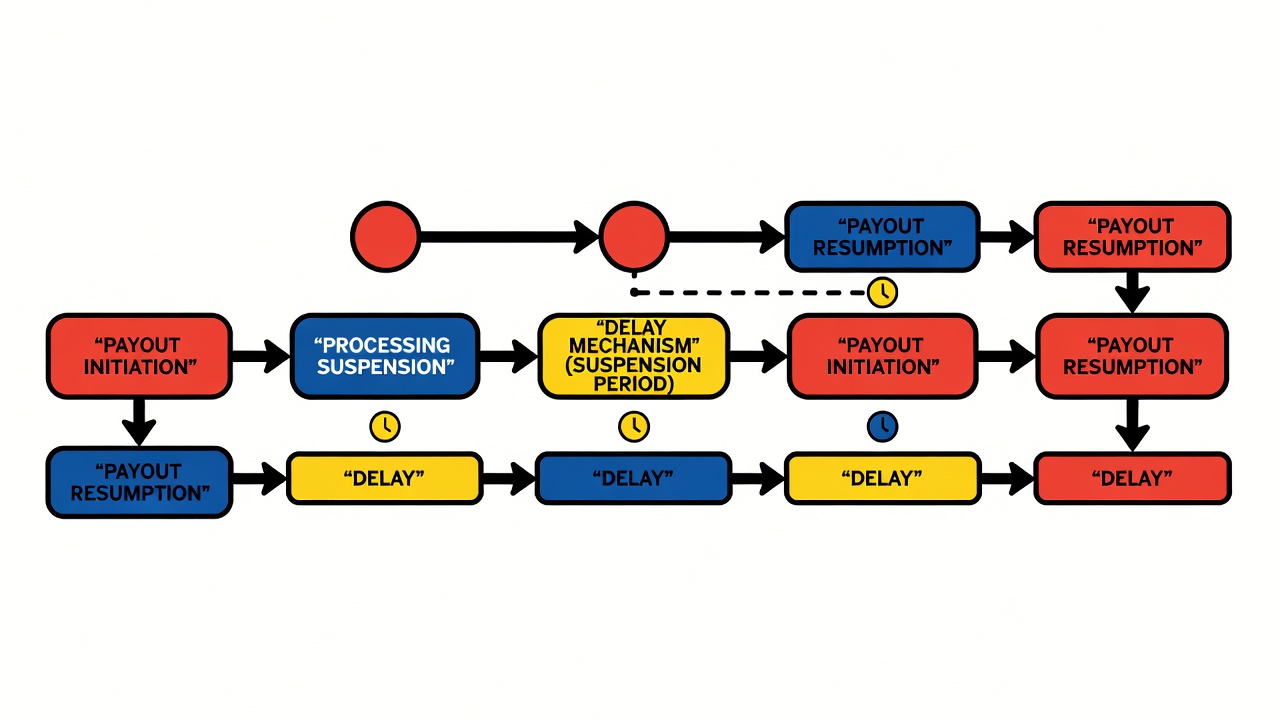
A player at FanDuel wins 5,000 USD. They request a withdrawal. The system tells them their withdrawal has been submitted and will process in 3-5 business days. They wait. On day 5, the money appears in their bank account. This timeline is not accidental. It is engineered.
The withdrawal process has several stages. First, the operator confirms the withdrawal request. They verify that the account is not flagged, that the player has completed wagering requirements (if applicable), and that the funds are available. Second, they process the withdrawal through the payment processor (Square, PayPal, Stripe, or a gambling-specific processor). Third, the processor confirms the transaction with the player's bank. Fourth, the bank processes the payment on their end. This all takes time, and operators know exactly how much time each stage consumes.
The strategic timing is in stages two and three. An operator can submit a withdrawal to their payment processor the same day it is requested, in which case it reaches the player in 2-3 days. Or they can delay submission to the processor, in which case it takes 5-7 days. The operators typically choose the latter, even when faster processing is available and costs the same. Why? Because a 5-7 day delay is five days during which the player's money is still in the operator's possession. During those five days, the player might change their mind about the withdrawal. The money might be re-deposited into their account for "one more bet". Statistics show that 5-10% of pending withdrawals are cancelled before they complete.
The Technical Infrastructure
The withdrawal system is fully automated, so delays are not due to manual processing. When you click "Withdraw", the system immediately moves your funds from your betting account into a separate "pending withdrawal" account. This account is segregated but the money is still technically in the operator's control. The operator can hold it there for days without any regulatory violation. The money is yours legally, but physically it has not left their infrastructure.
Payment processors like Skrill or Neteller have relationships with operators where they batch withdrawals for efficiency. Instead of processing each player's withdrawal individually, they accumulate withdrawals over a day and batch-process them at end of day. This batching is presented to the player as "processing time" but it is actually the processor optimising their costs.
Some operators offer faster withdrawal speeds for a fee. Withdrawing 5,000 USD might normally take 5 business days, but for a 30 USD fee, you can get instant withdrawal. This is profit extraction disguised as a service. The operator would have processed the withdrawal instantly for zero cost, but by charging for speed, they monetise impatience.
The Deposit and Withdrawal Asymmetry
Deposits clear instantly. A player deposits 1,000 USD and the funds are immediately available for betting. This is because operators want to remove friction from depositing. But withdrawals are slow because operators want to remove friction from withdrawing. The contradiction is intentional. Quick deposits mean players can act on impulse. Slow withdrawals mean players have time to reconsider.
The regulatory environment permits this asymmetry. The UK Gambling Commission requires operators to pay withdrawals "without undue delay" but does not define undue. Five business days is generally accepted. The Malta Gaming Authority has similar vague language. Curaçao eGaming is even less specific. Operators have exploited this ambiguity to make withdrawals as slow as regulations allow.
The Worst-Case Scenario
When a player is flagged for suspicious activity (high velocity deposits and withdrawals, unusual win patterns, linked to other accounts), the operator might freeze the withdrawal indefinitely. They are required to investigate before releasing funds. This investigation can take weeks or months. The player's money is trapped in the system. They cannot withdraw it, but they also cannot spend it on bets (typically, though some operators still allow wagering on frozen accounts). This is particularly common with cryptocurrency withdrawals, where the investigation claims to require additional verification.
Most withdrawals complete without incident. But the infrastructure is deliberately designed to maximise the operator's window to recapture money before it leaves the system.
Markets in this line
Keep reading
Same market
 GuidesWhat to Do When Your Casino Withdrawal Fails: A Long Look at a Small Problem
 Crypto GamblingBitcoin Deposits at Online Casinos: The Basics
 BonusesHow Exchange Rates Can Affect Crypto Casino Deposits
 PaymentsAML Compliance in Online Gambling: A Plain-English Explainer
 BonusesRefer-a-Friend Bonuses: How Referral Rewards Typically Work
 Big WinsTransaction History: How to Read Your Casino Cashier Statements