
How to Verify a Poker Site's Legitimacy Before Depositing
Before you wire a dollar to any poker site, run through four non-negotiable checks. License status, RNG certification, cashout track record, and ownership transparency. Skip one and you're playing in a rigged stadium with no ref.
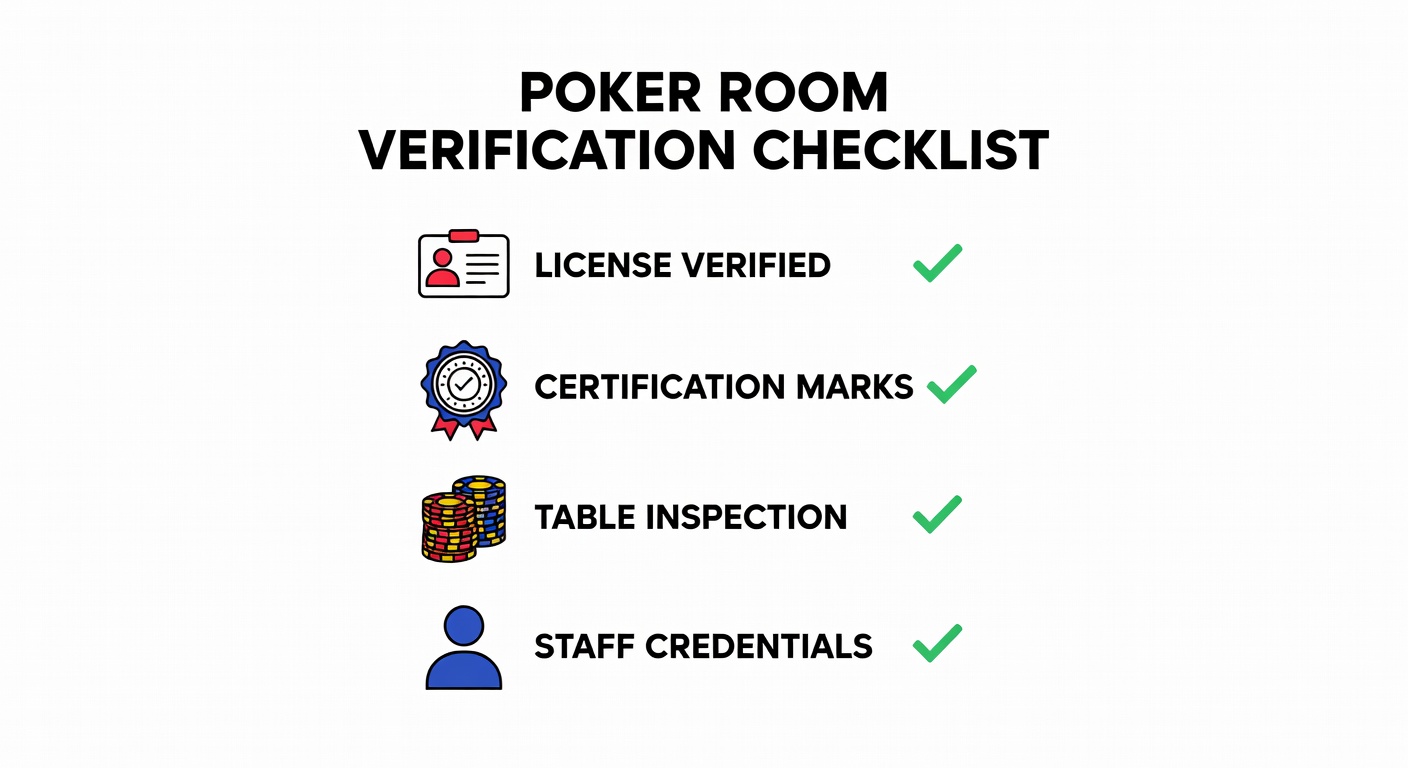
Let me give you the honest pregame breakdown on online poker legitimacy, because most players skip the tape study and go straight to depositing. That's how you end up stuck on a site that takes three months to return your money or vanishes entirely.
Here's the play: run four checks before you deposit a single dollar. If a site fails any one of them, walk.
Check One: The License Is the Rulebook
A poker site's license tells you which rulebook it's playing under. The difference between a Malta Gaming Authority license and a Curacao eGaming license is not cosmetic. It's the difference between a league that has a commissioner's office and one that has a P.O. box.
Here is what each major license actually provides:
- Malta Gaming Authority (MGA): Player protection requirements, mandatory segregated accounts for player funds, formal dispute resolution process. Operators must carry financial reserves. You have an actual appeals pathway if you have a cashout dispute.
- UK Gambling Commission (UKGC): Arguably the tightest framework in operation. Requires AML procedures, player fund protection at a defined level, self-exclusion integration with GAMSTOP, and regular compliance audits. Operators cannot hold player funds in the same account as operating capital.
- Gibraltar Regulatory Authority: Respected, longer history, used by some of the major brands like bet365 and 888.
- Curacao eGaming: Lower bar. The Curacao framework requires less capitalization and has weaker player protection requirements. Legitimate operations use it. So do a lot of operations you should avoid. A Curacao license alone is not enough to trust a site.
- No license: Not a framework at all. Full stop.
To verify a license, go to the regulator's website directly and search the licensee register. Do not trust the license badge on the poker site itself. Anyone can photoshop a seal. The MGA publishes its full licensed entity list at mga.org.mt. The UKGC publishes its register at gamblingcommission.gov.uk. Pull the primary source.
Check Two: RNG Certification Confirms the Shuffle Is Real
Poker depends on a fair shuffle. If the card distribution is predictable or biased, any player with access to the pattern can exploit every hand.
Licensed online poker sites must submit their random number generators to independent testing. The main certifying bodies are:
- eCOGRA (UK-based)
- Gaming Laboratories International (GLI)
- BMM Testlabs
These bodies run statistical analysis across millions of simulated deals to confirm that the RNG output matches theoretical probability distributions. A valid certification mark means the test was passed. Sites post these certificates in their help sections or their responsible gambling pages.
If you cannot find an RNG certification from one of these three bodies or an equivalent body approved by the site's regulator, that is a red flag. The shuffle may or may not be rigged, but you have no external verification.
Check Three: Cashout Track Record Is the Stats Line
A site's cashout history is its performance record. You want to see consistent execution over a long sample, not just what they claim. Here's how to research it:
- Search the site name on forums like TwoPlusTwo, Reddit's r/poker, and Casinomeister. Filter for cashout complaints, not just general discussion.
- Look at the timestamp spread of complaints. A cluster of withdrawal issues in a narrow period often signals a liquidity problem or a pending exit.
- Check if the site's terms specify processing times and whether reviews confirm those times are honored in practice.
The benchmark is 72 hours for standard e-wallet withdrawals at a well-run site. Bank wire takes longer by necessity. Sites that habitually run 10-plus business days on e-wallet withdrawals without a documented AML review reason are dragging their feet.
Check Four: Ownership Transparency Is the Injury Report
Who owns the site? This sounds basic but many poker sites are operated by holding companies with deliberately layered structures. You want to be able to answer: if something goes wrong, who am I actually dealing with?
A legitimate site will publish its operating company name, its registration jurisdiction, and the name of its licensed entity. Cross-reference that company name against the regulator's register you pulled in Check One. They should match.
If a site's About or Legal page lists no company name, no registration number, and no physical address, that structure exists for a reason. The reason is usually not favorable to players.
Major poker networks like the iPoker Network, the Microgaming Poker Network, and GGPoker's network operate across multiple skin sites. Knowing which network a site sits on tells you something useful about software integrity and player pool liquidity, even if the skin itself is newer.
The Call Before You Commit
Run a quick test before depositing. Contact support with a specific question about their license number. Ask them to confirm the certifying body for their RNG. Note the response time and whether the answer is specific or vague.
A legitimate operation answers that question immediately because the information is public record and the staff is trained on it. A problematic operation deflects or gives you marketing copy instead of a license number.
Four checks, one support test. That is the full pre-deposit analysis. Takes about twenty minutes. Much shorter than waiting four months to recover funds from an unlicensed operator.
Markets in this line
Keep reading
Same market
 Sports BettingPlayer Prop Line Movement: News Clocks and Injury Tags
 GuidesNo Vig Fair Odds Calculator: Three Methods, Worked Through
 GuidesUnderstanding Slot Variance: A Player's Guide
 PokerMolly's Game: The Real Story Behind the Hollywood Poker Nights
 CelebritiesPamela Anderson's Poker Losses and Baywatch Paychecks
 GuidesWhat to Do When Your Casino Withdrawal Fails: A Long Look at a Small Problem